
“To Whom It May Concern” is a common phrase that is used as a formal opening for an email or letter addressed to someone whose details are unknown or, in some cases, to no one in particular. It is mostly used in the professional context on different types of applications, cover letters, formal letters, prospect letters, addressing hiring managers, or requesting referring details. In situations where we can’t specifically use the name of the person we are referring to, “To Whom It May Concern” is the only way to address them. You can find and explore a list of well written and highly used types of To Whom It May Concern letters at Docsi in Word, PDF, and other formats for easy download and editing according to your requirement.
To Whom it May Concern Letter Templates [Download in Word, Google Docs]
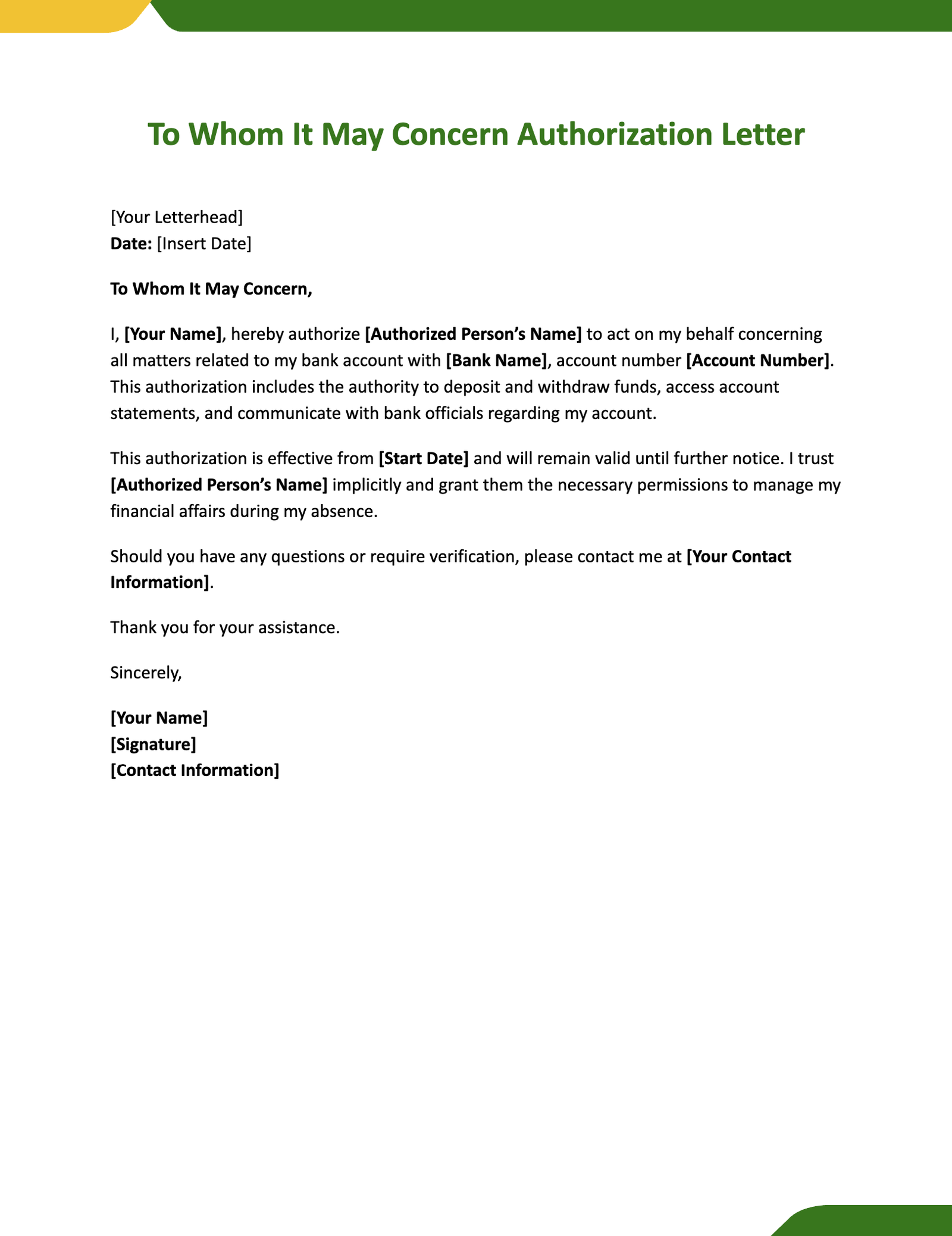
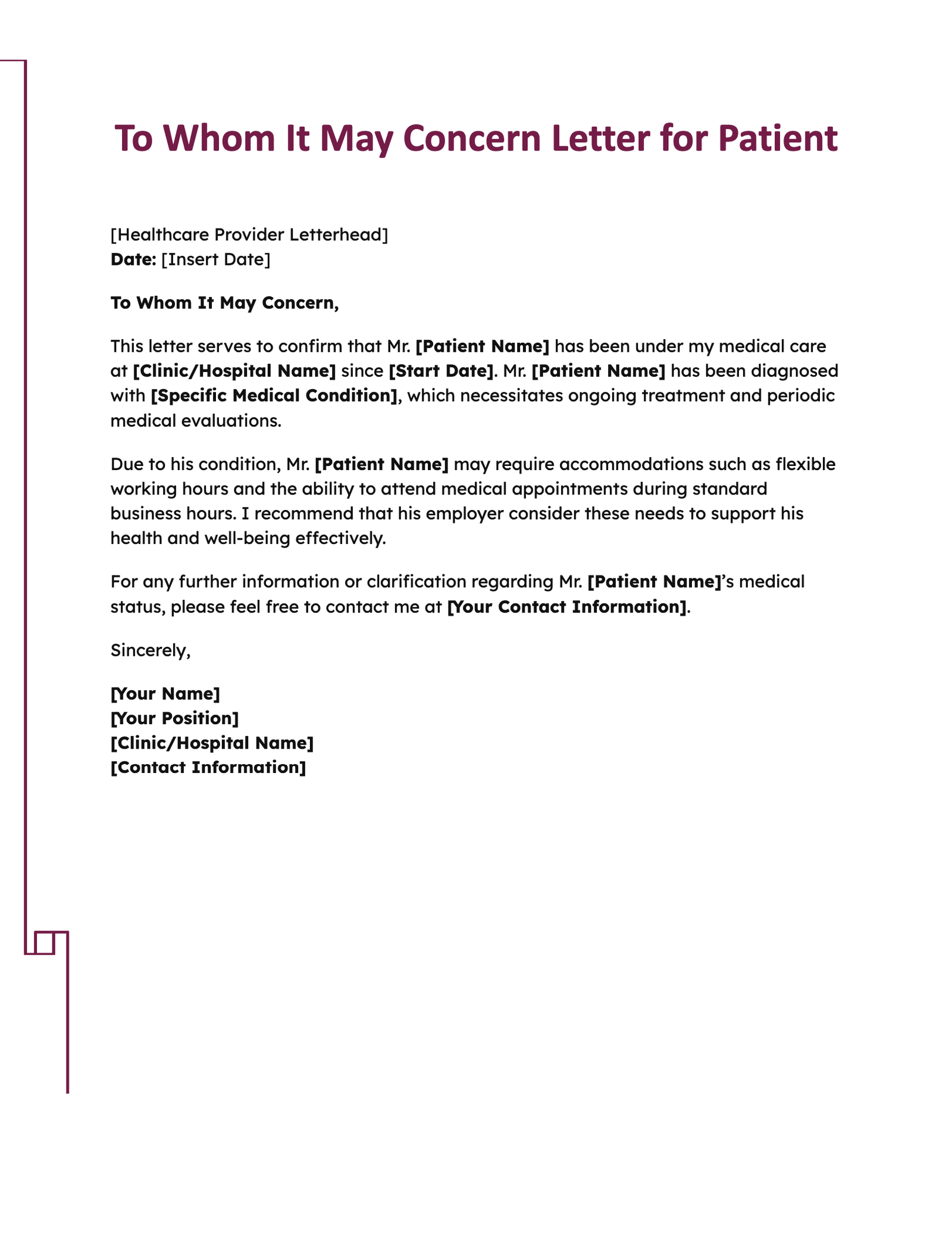
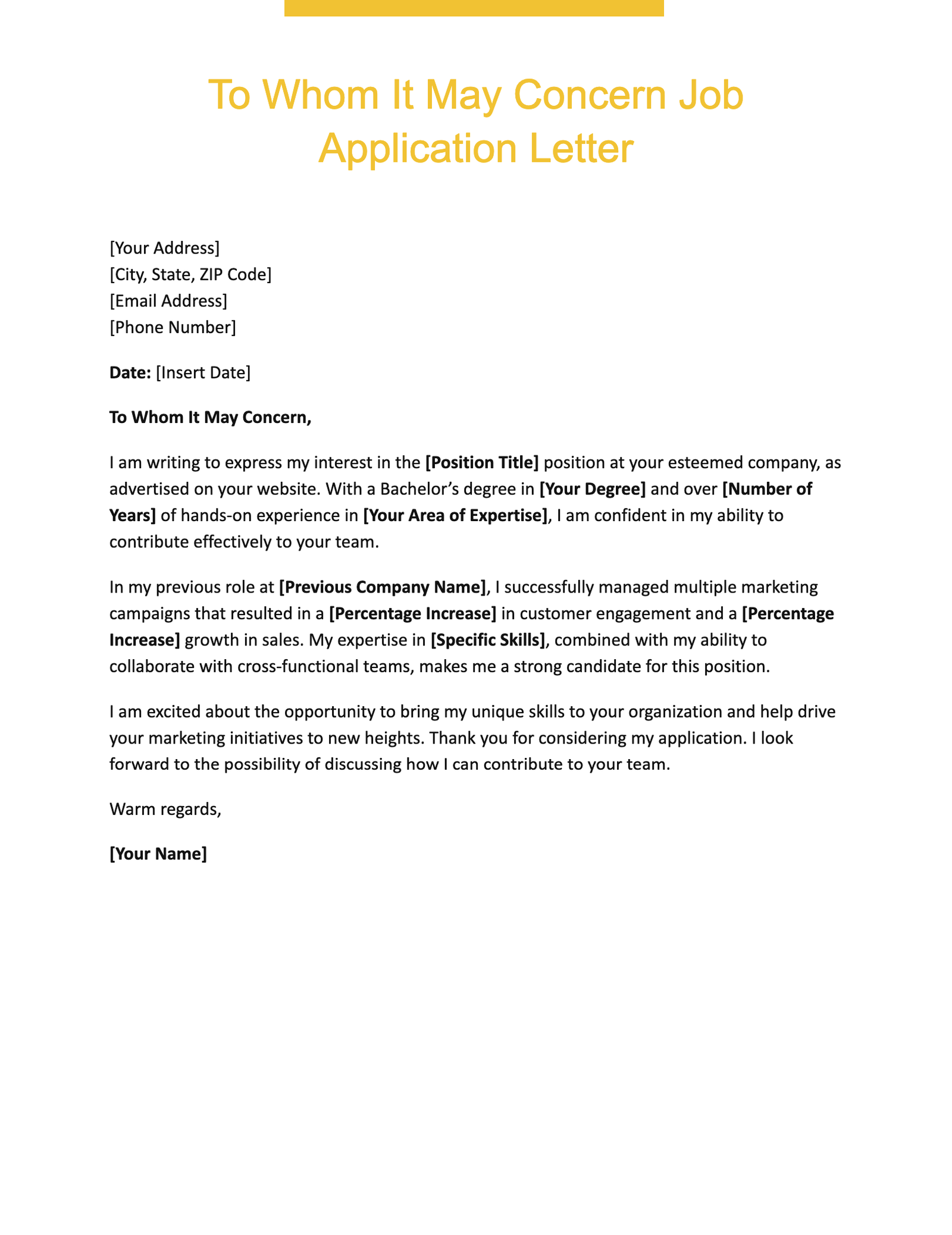
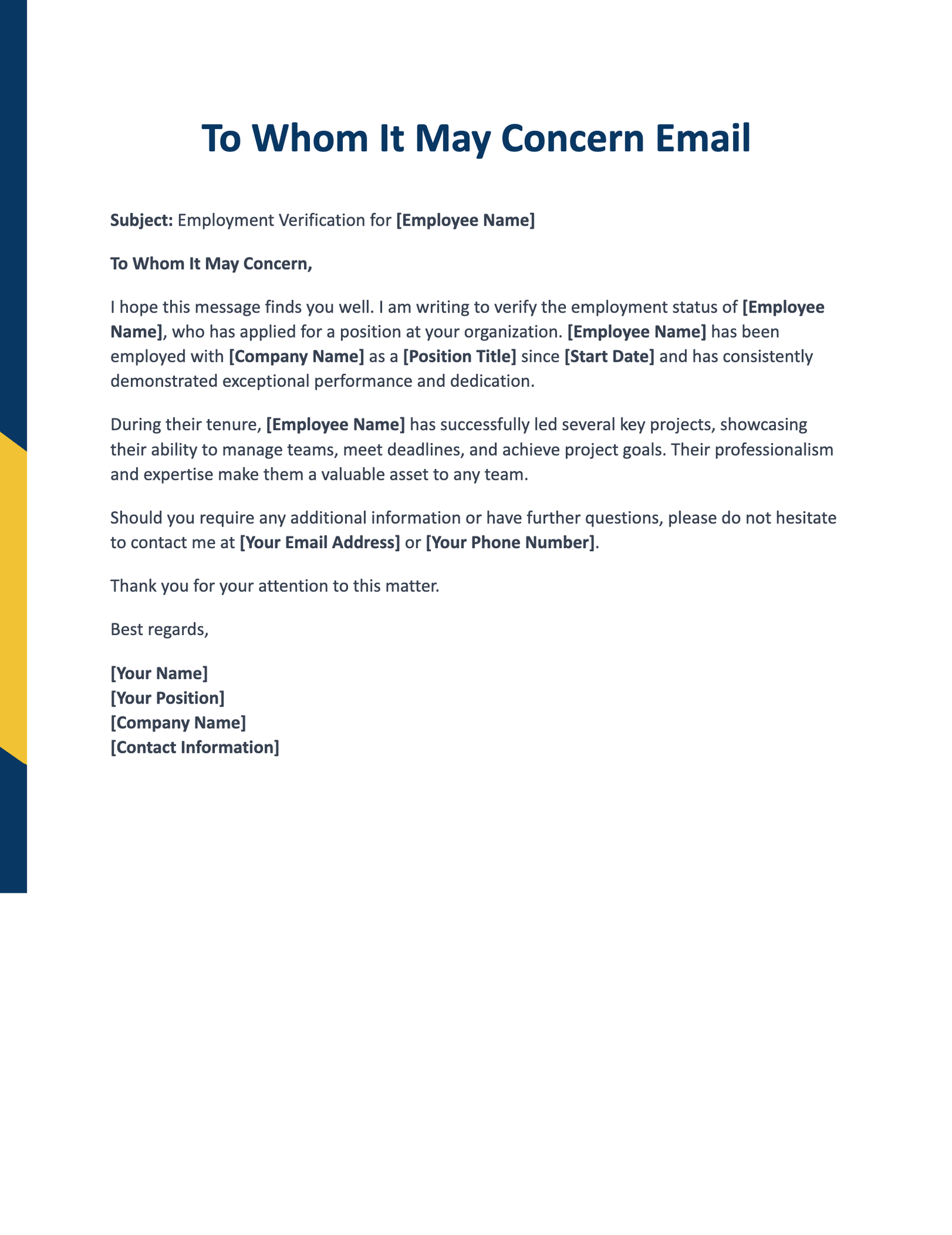
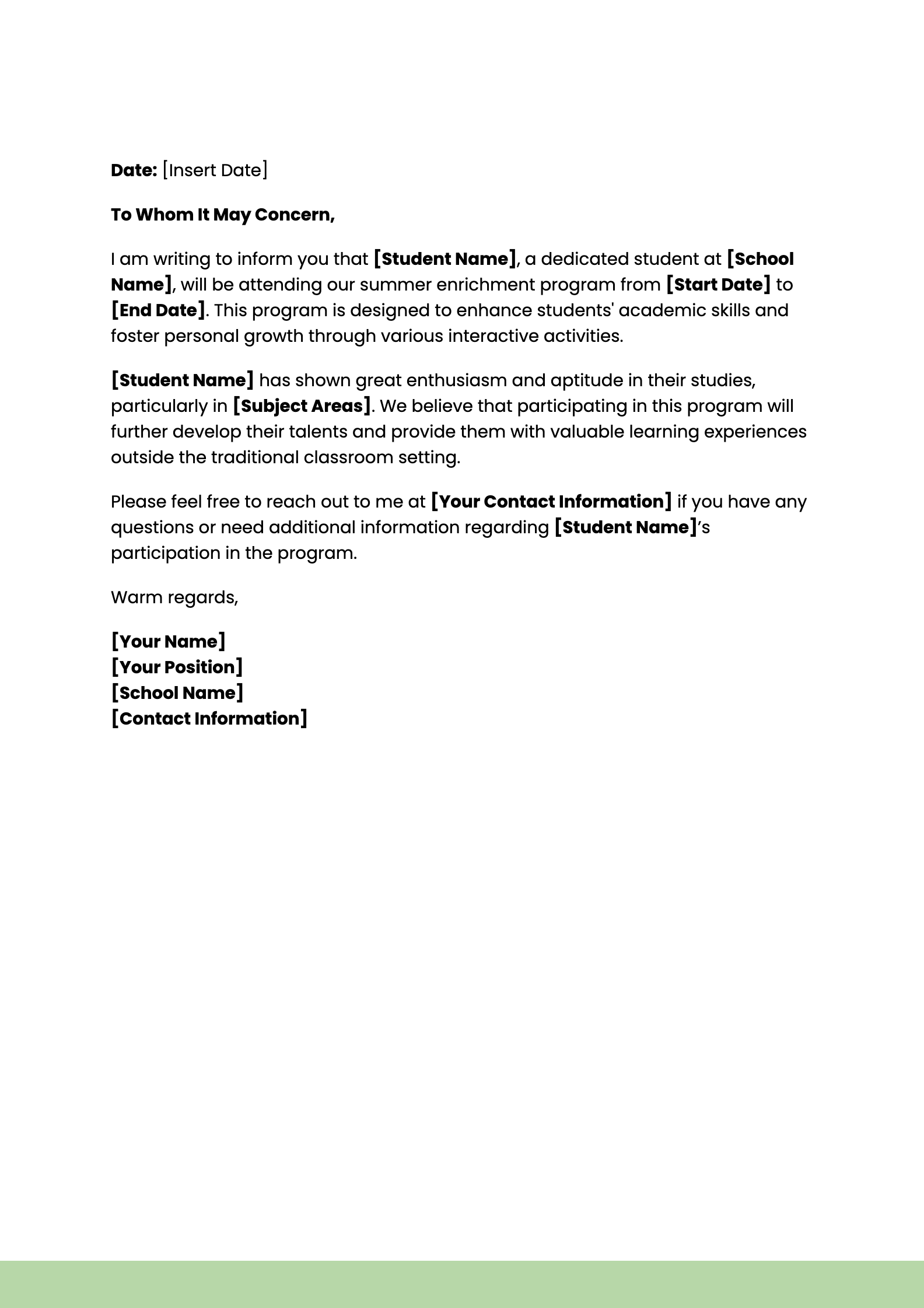
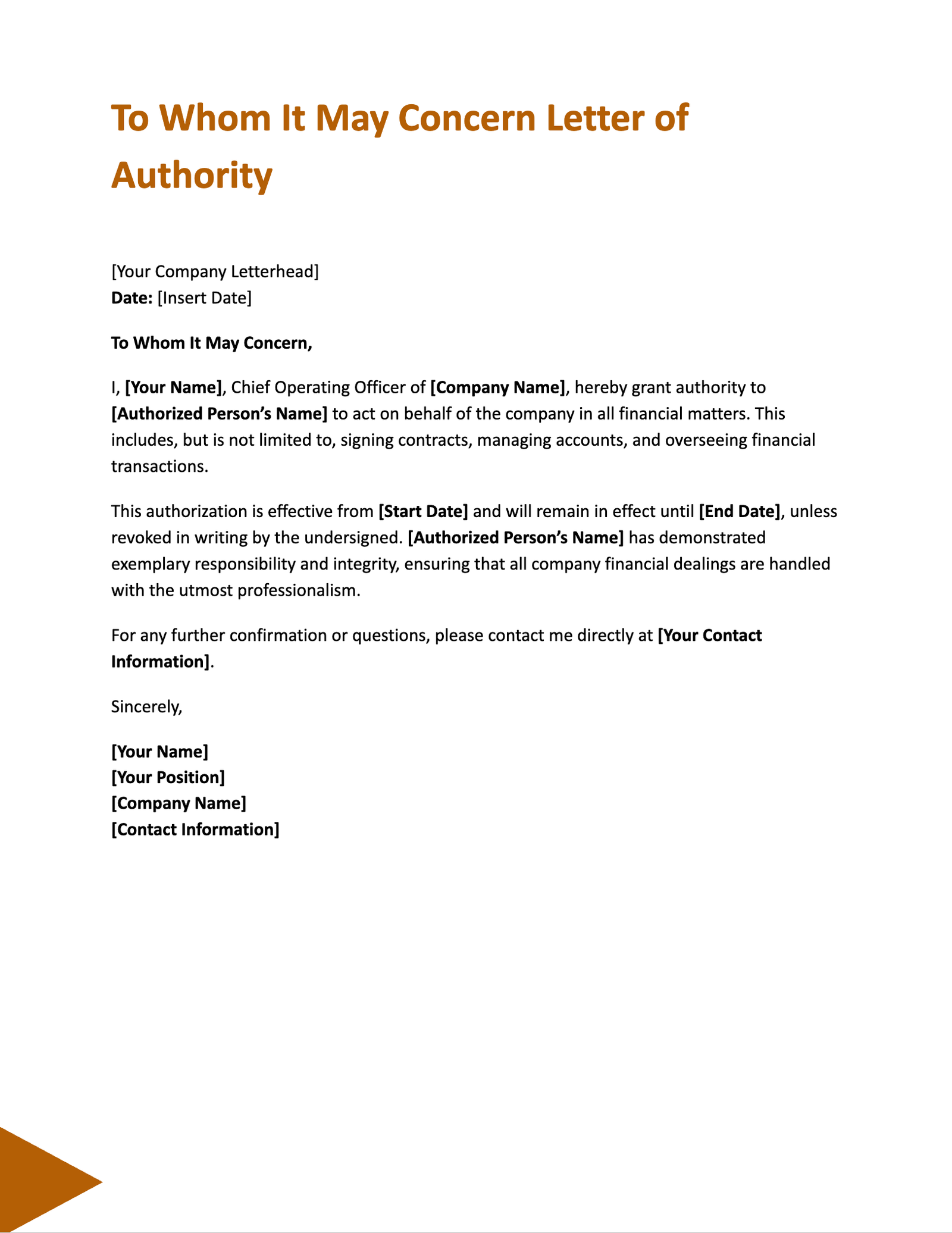
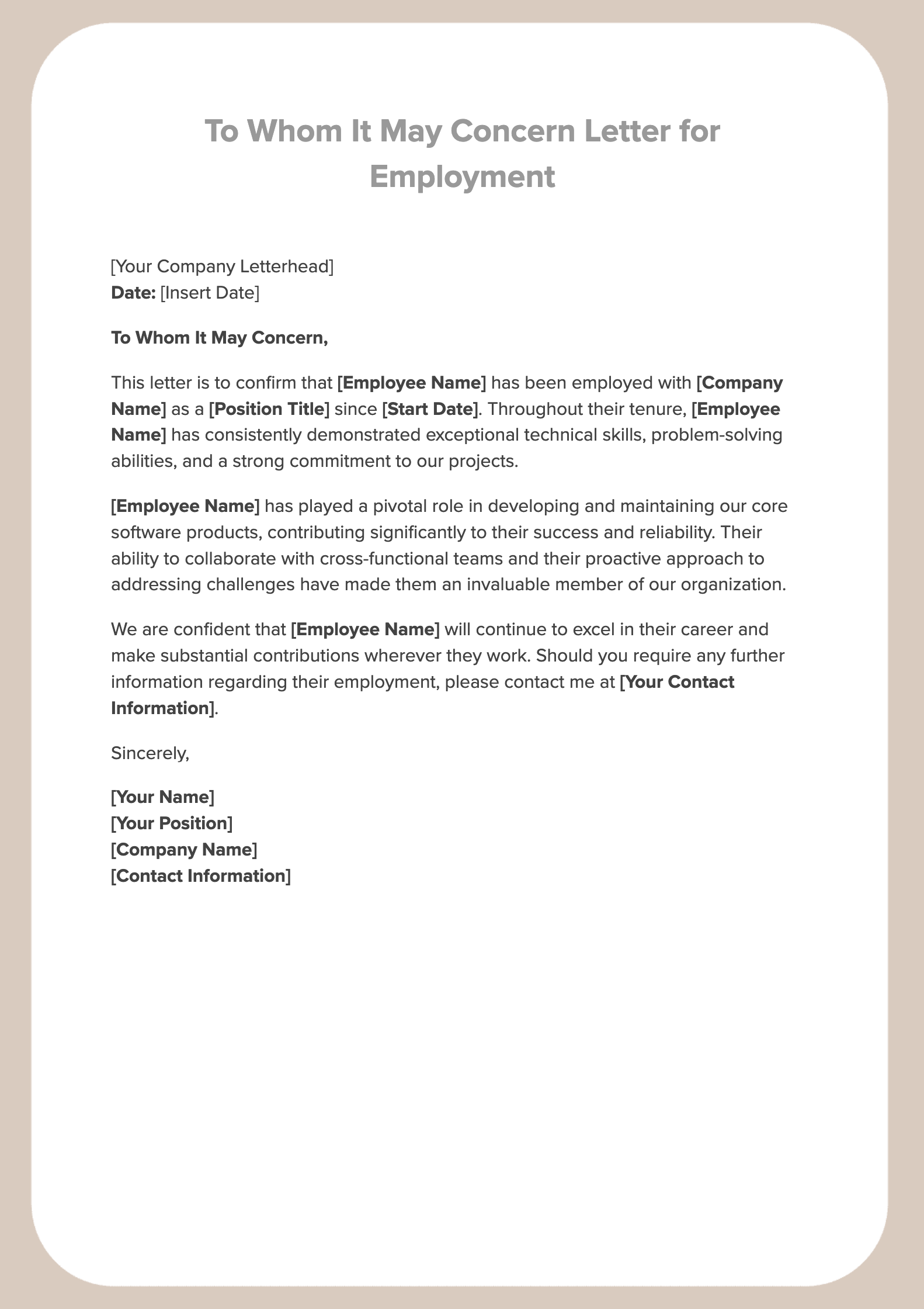
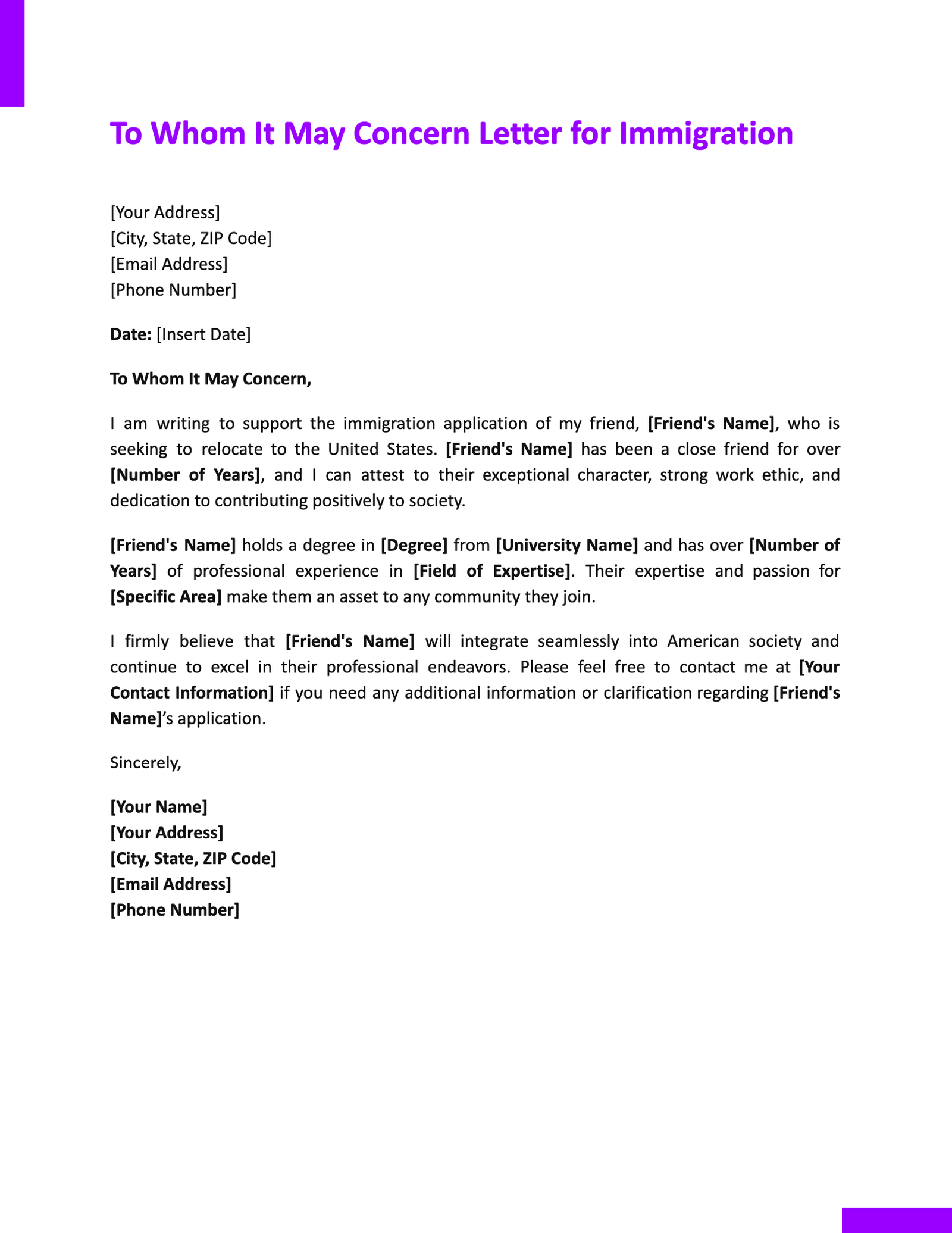
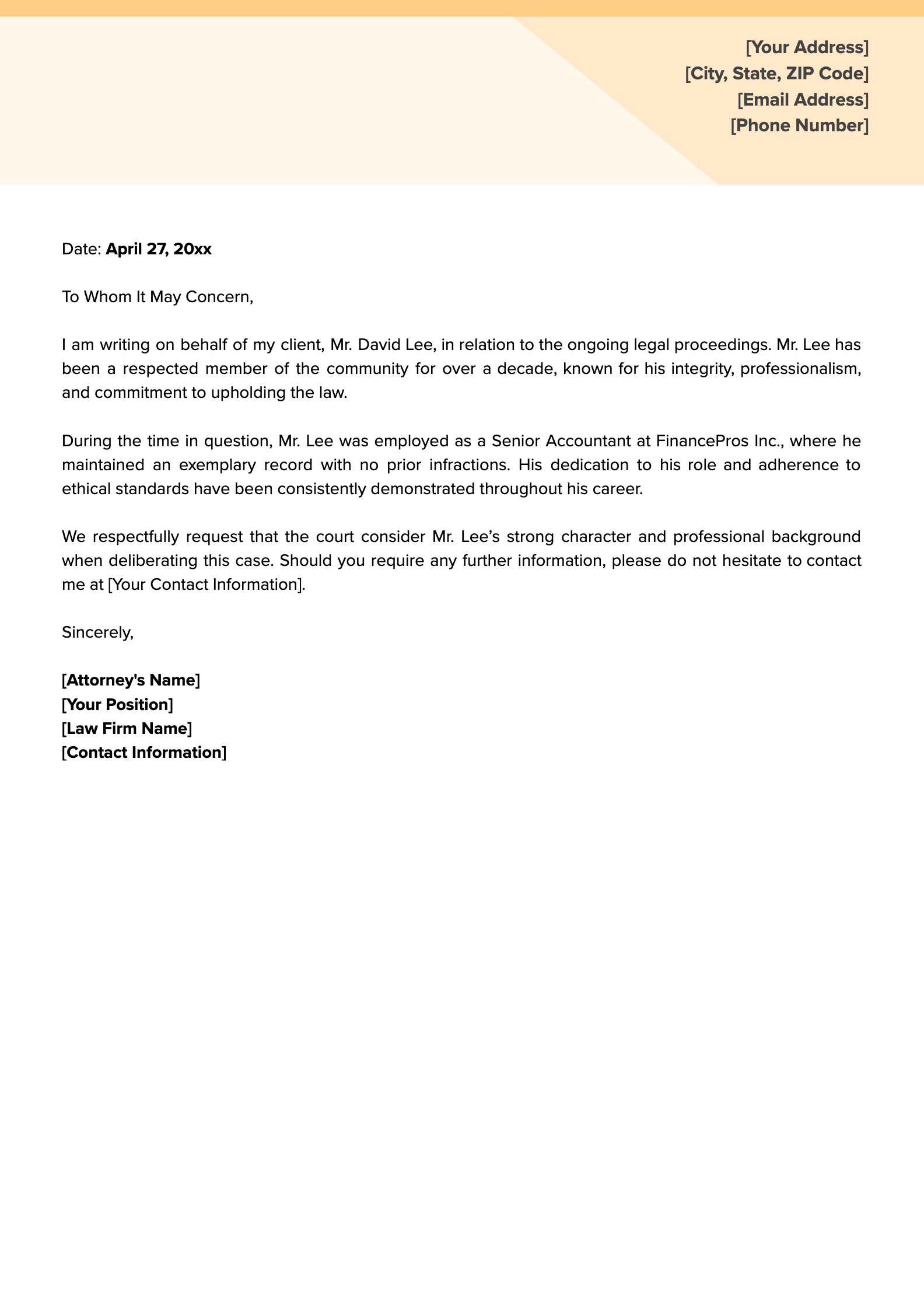
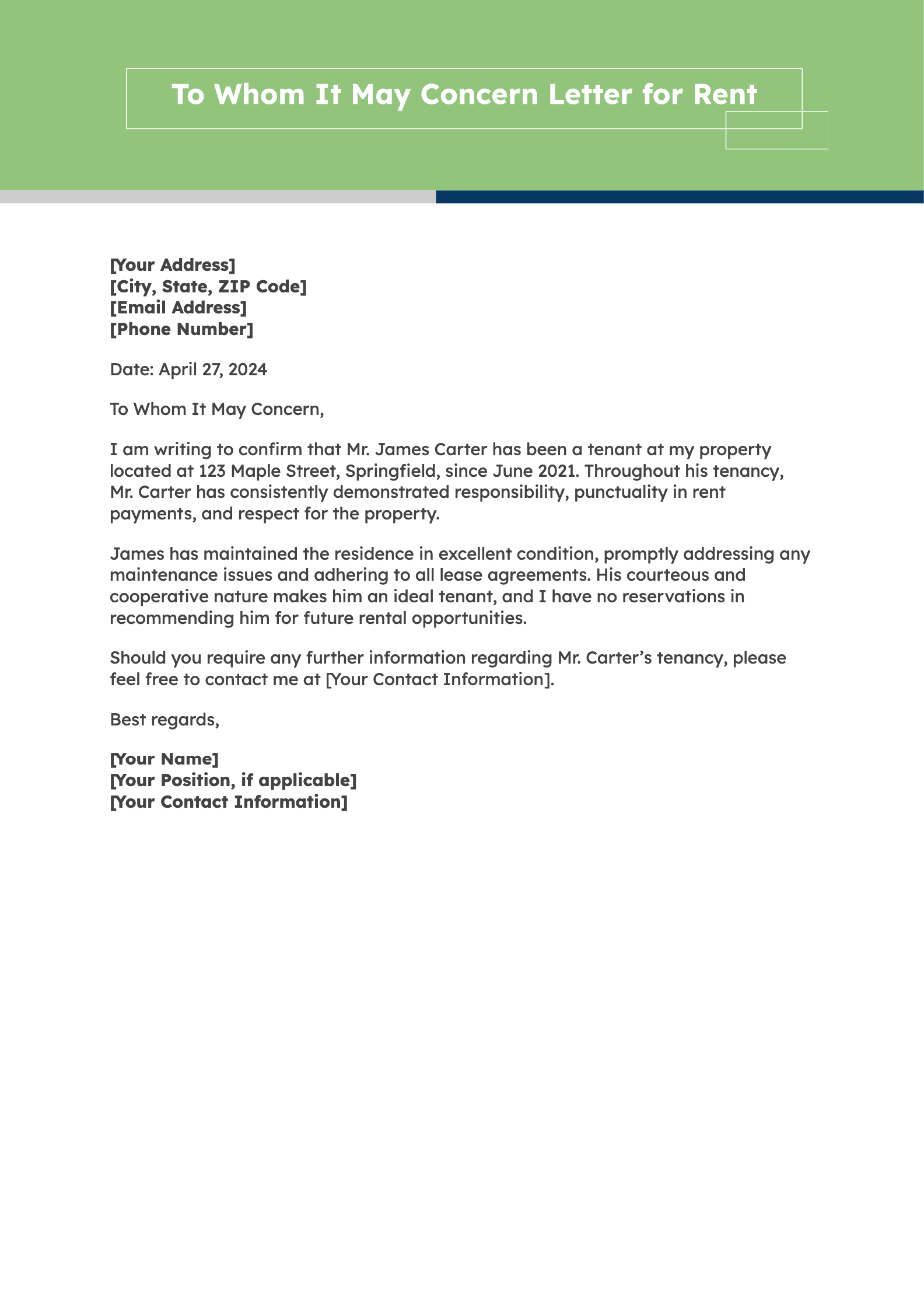
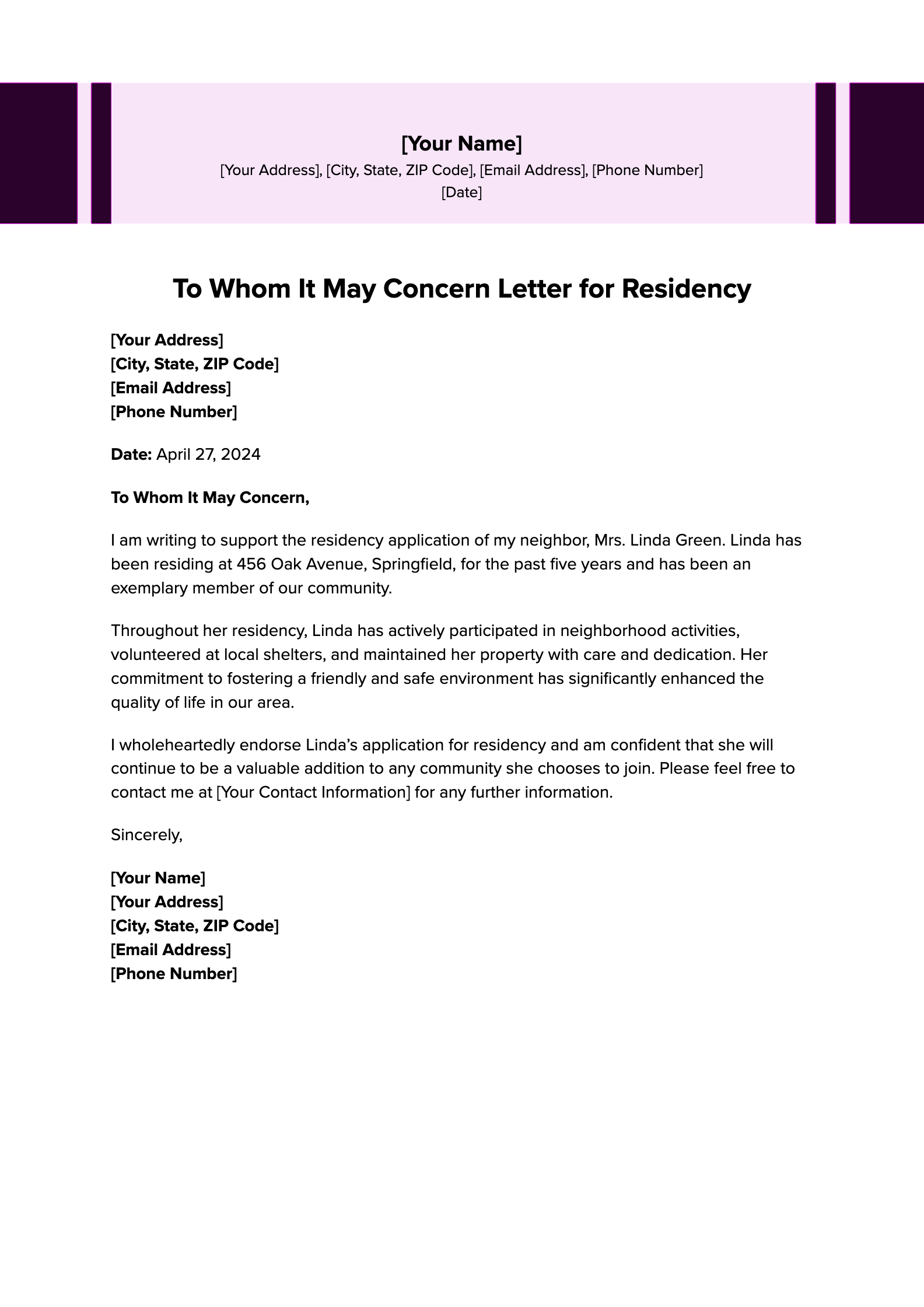
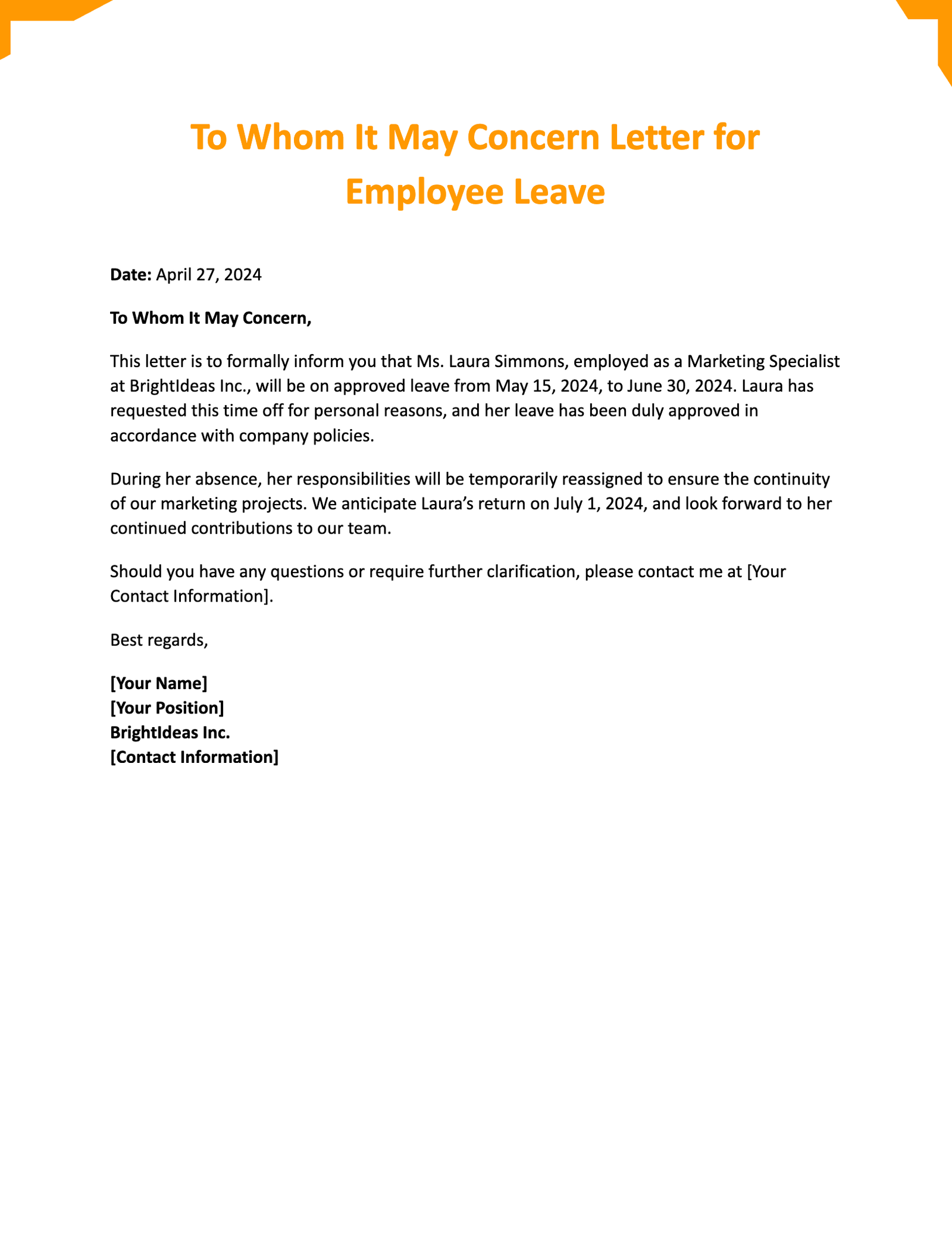
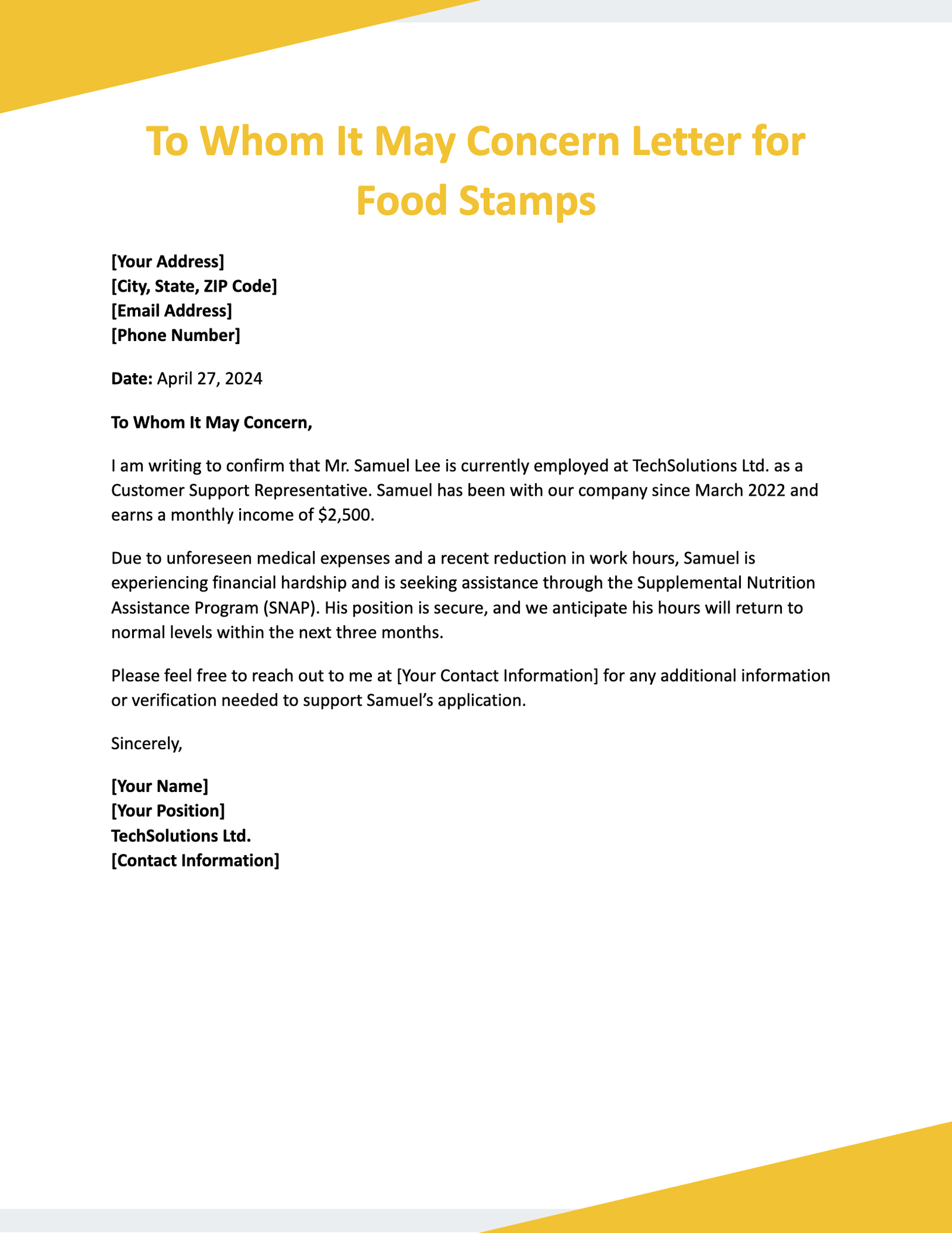
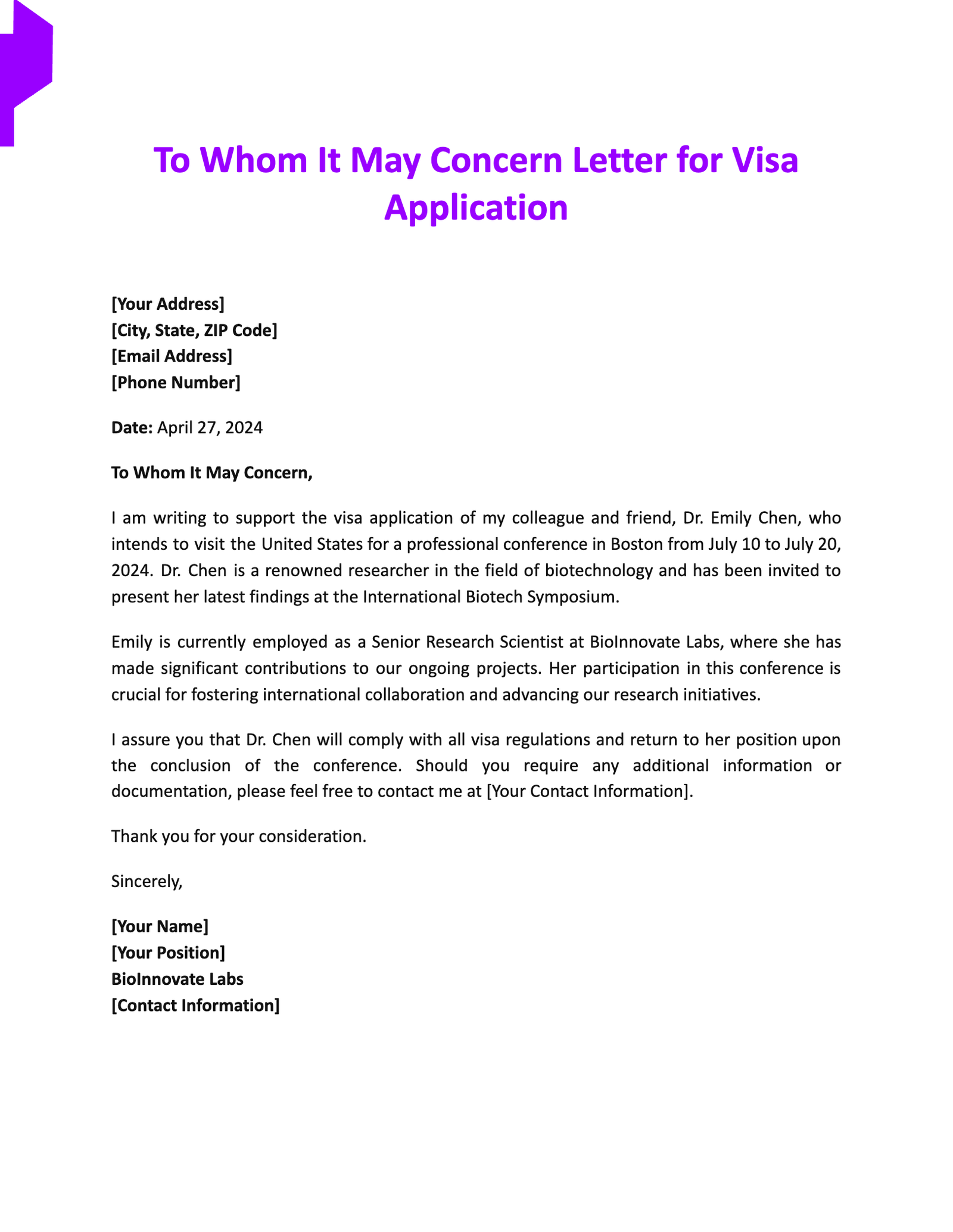
To Whom It May Concern Letter Format
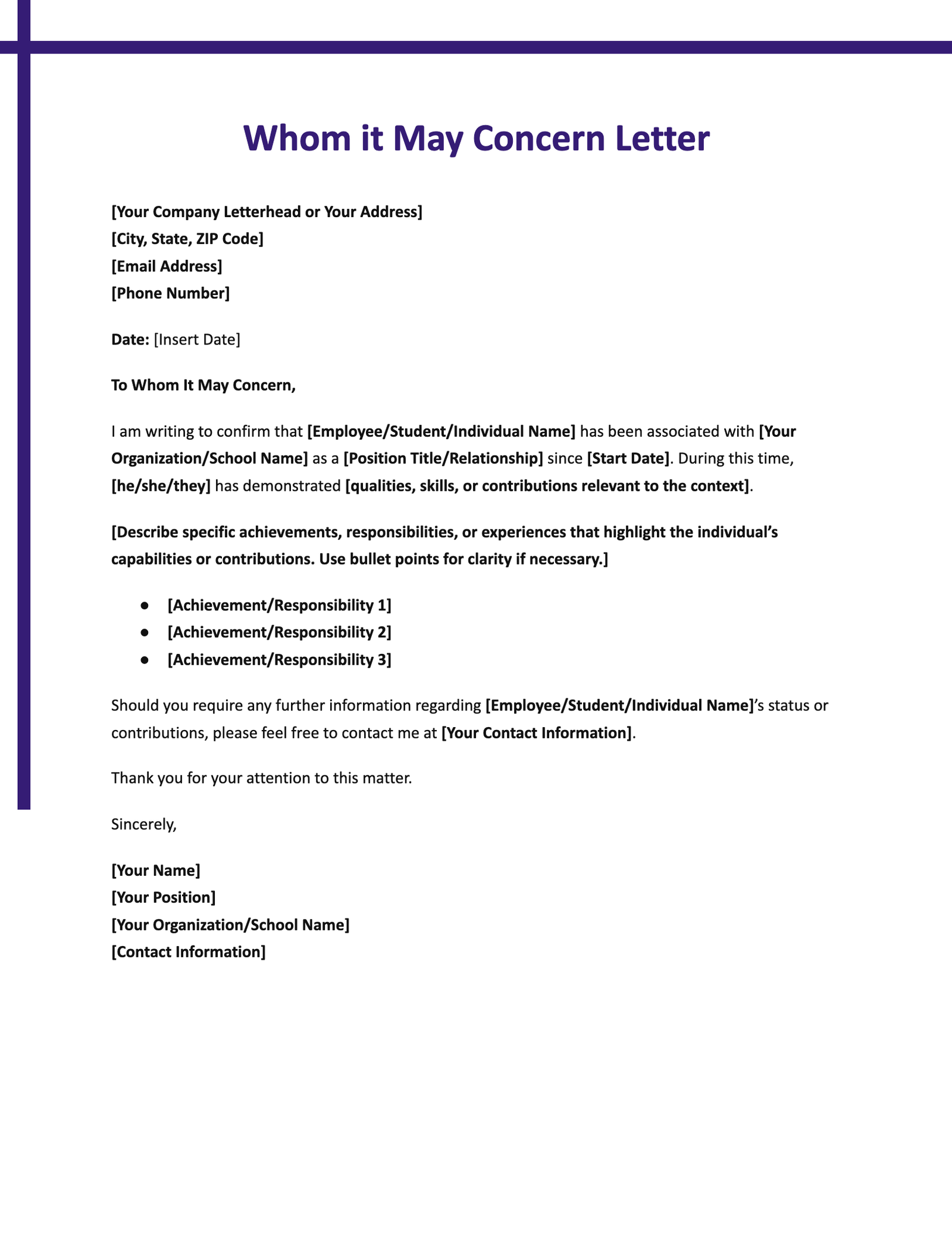
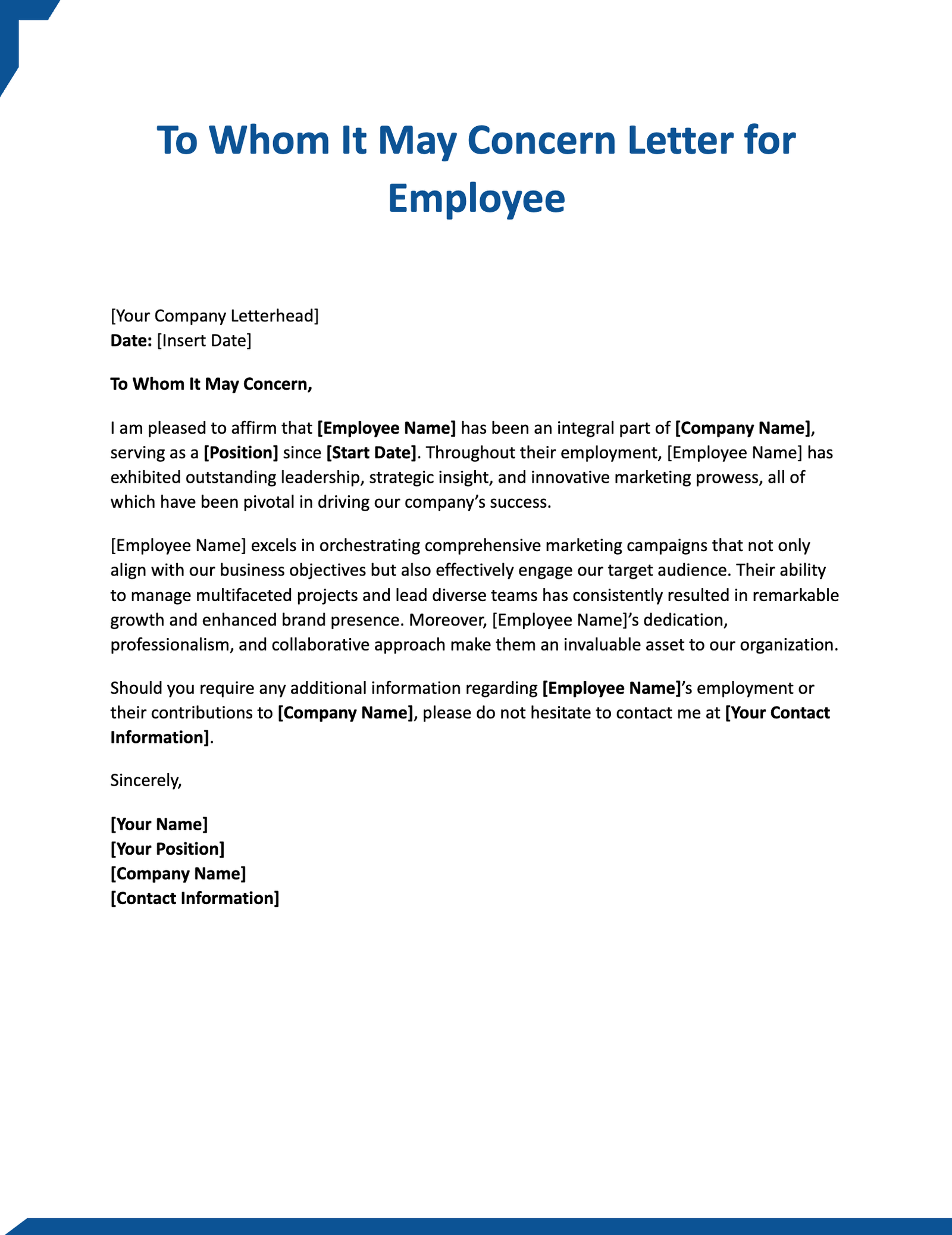
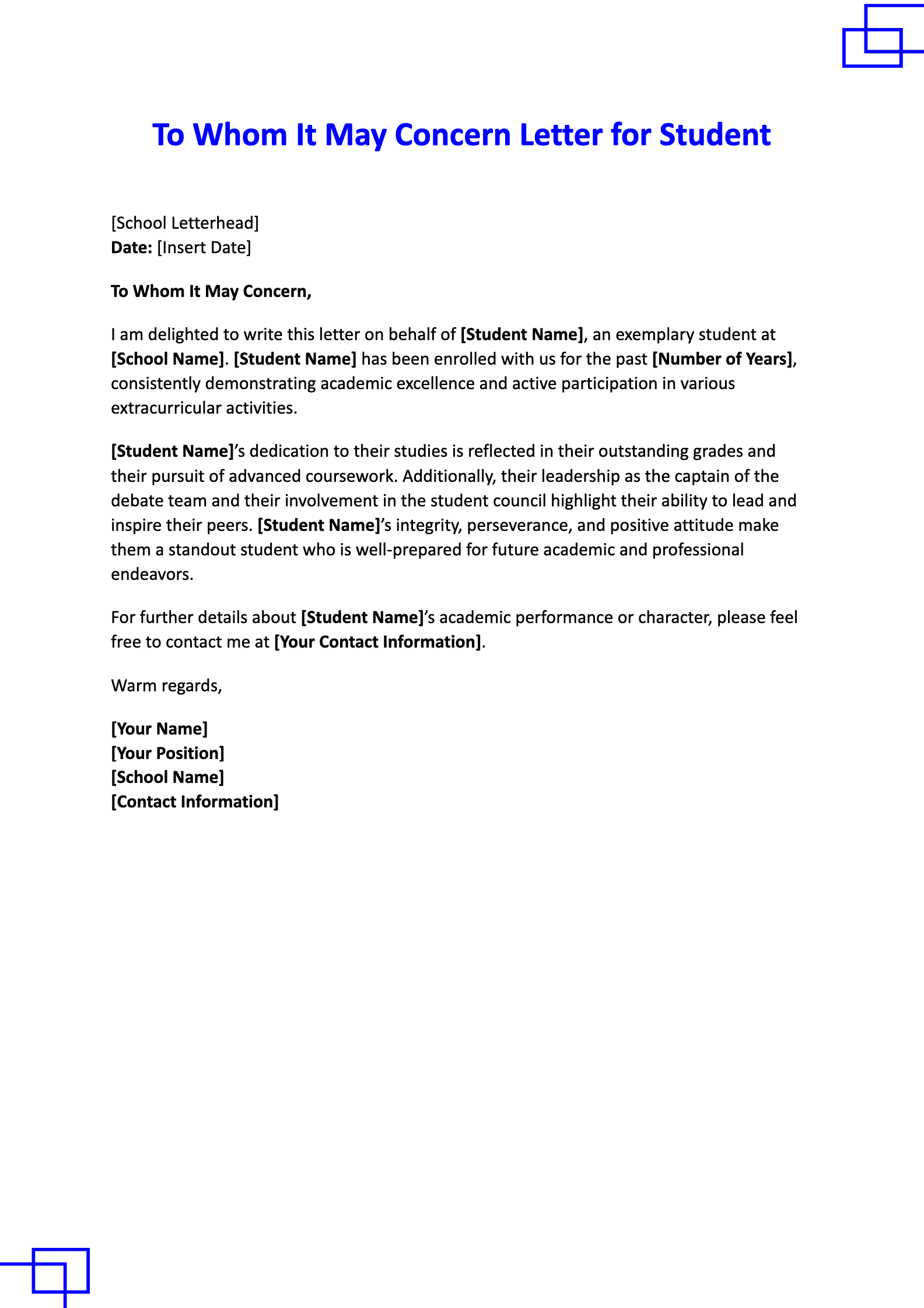
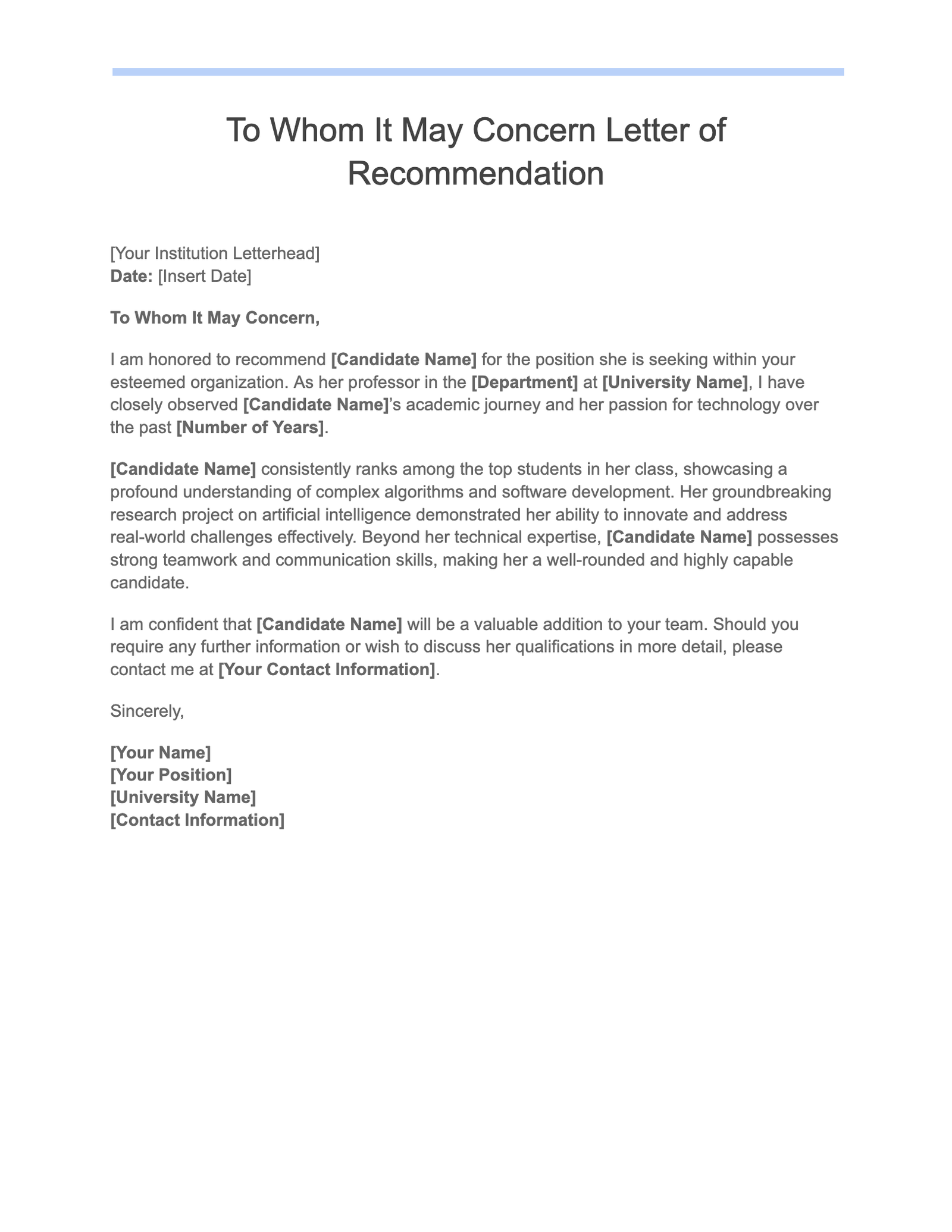
“To Whom It May Concern” is the common salutation when the recipient’s details are unknown. The sample format of a To Whom It May Concern letter includes the contact information, date, recipient’s information, a well concise body content with straight and specific details, along with the closing note with “Sincerely” followed by the name.
The Letter strictly follows the standard business letter format having all other
- Contact Information
Add the contact information, like your name, address, phone number, email, and other details.
- Date:
Mention the day when you are writing the letter.
- Recipient’s Information
Mention the details of the company along with the address.
- Salutation
Add “To Whom It May Concern”.
- Body Content
In the introduction part of the letter, clearly mention the purpose of the letter and what your main motto or expectation is behind writing it. In the main content section, write detailed information and clearly explain your request.
Conclusion: Summarize the main key points and purpose in this section. - Conclusion
Summarize the main key points and purpose in this section.
- Formal Closing of Letter
Ensure to use a formal closing, such as Sincerely or Respectfully, at the end.
- Signature
After the formal closure of your To Whom It May Concern letter, keep your typed name along with a handwritten signature.
How to Write “To Whom It May Concern Letters”?
“To Whom It May Concern” letters are usually in a formal tone, followed by a gap and then covering the body of the letter. Keep the first letters capitalized, maintain proper punctuation, and write it concisely.
Steps to Write the Letter:
- Position: While writing the letter, add “To Whom It May Concern” on a separate left corner at the top left, at the starting of the letter or email.
- Punctuation: After writing “To Whom It May Concern” in the letter, add a colon (:) at the end of the phrase to maintain the formal opening.
- Capitalization: Keep the first letter of every word capital in the phrase.
- Spacing: Once after writing the phrase, ensure to give at least a two space gap before starting the body of the letter.
- Content: You can start the body directly, keep it straight to the point, and avoid unnecessary elevations in the letter.
- Proofread: Once after finishing the letter, proofread it carefully to correct any spelling or grammar mistakes and make it look fully professional.
What is the “To Whom It May Concern Letter Format”?
“To Whom It May Concern” is the common salutation when the recipient’s details are unknown. The sample format of a To Whom It May Concern letter includes the contact information, date, recipient’s information, a well concise body content with straight and specific details, along with the closing note with “Sincerely” followed by the name.
The Letter strictly follows the standard business letter format having all other standards in its place.
- Contact Information: Add the contact information, like your name, address, phone number, email, and other details.
- Date: Mention the day when you are writing the letter.
- Recipient’s Information: Mention the details of the company along with the address.
- Salutation: Add “To Whom It May Concern”.
- Body Content: In the introduction part of the letter, clearly mention the purpose of the letter and what your main motto or expectation is behind writing it. In the main content section, write detailed information and clearly explain your request.
- Conclusion: Summarize the main key points and purpose in this section.
- Formal Closing of Letter: Ensure to use a formal closing, such as Sincerely or Respectfully, at the end.
- Signature: After the formal closure of your To Whom It May Concern letter, keep your typed name along with a handwritten signature.
What does “To Whom It May Concern” mean and when should it be used?
“To Whom It May Concern” is a formal way of representation at the beginning of the application letter, cover letter, and many others at the beginning of the article. It is mainly used in the following situations:
- Aiming multiple recipients
- Recipient’s name is unknown
- The letter is intended for general use such as employment verification, formal documents submitted in various organizations and more.
- Official or formal communication in cases like writing letters to back, government offices, HR departments and others.
Is “To Whom It May Concern” still professional or outdated?
Yes, “To Whom It May Concern Letters” are professional, but they sound more formal and generic. Due to the impersonal tone, many consider them outdated, as nowadays employers and letters opt for role-specific titles and choose modern alternatives.
How do you correctly format a letter that starts with “To Whom It May Concern”?
Always format “To Whom It May Concern” salutation at the top left corner.. In this phrase, every first letter of the word must be capitalized, and end a colon (:). After Salutation, give at least two spaces before beginning to write the body of the letter.
When is it inappropriate to use “To Whom It May Concern”?
“To Whom It May Concern” is inappropriate to use when the recipient’s name is available, when reaching out for collaboration or relationship building,, customer service related requests, and in situations where personalization is possible.
How have “To Whom It May Concern” letters helped people in jobs, studies, or visas?
“To Whom It May Concern Letters” actually plays a key role in helping people. These are helpful in employment verification while applying for a new job, background checks, and other purposes. Some employers also provide the “To Whom It May Concern” recommendation letter to submit for new employment opportunities. These are helpful for students in their education, as many schools and colleges issue “To Whom It May Concern” letters that confirm the student’s education, performance, and conduct during the period of time. To Whom It May Concern is also used in travel proof verification letters for employment, study status, financial backing proof, and others.
What common mistakes do writers share about using this salutation?
The most common mistakes are made while writing the “To Whom it May Concern Letter” are using it while the personalization of letter is possible, not using capitalization while writing the salutation, ending the salutation with comma instead of using the colon, using the solution for the informal emails, using it in the networking emails.
From experience, does addressing by name vs. “To Whom It May Concern” change response rates?
Yes, from experience and research personalized name and title have the higher response rate when compared with the Neutral or To Whom it May concern letter have less impact.
Can “To Whom It May Concern” still work well if you can’t find a contact name?
Yes, “To Whom It May Concern” works well as recruits and officials accept it. Using “To Whom It May Concern” won’t disqualify you but if personalization is possible, always choose a name or role.
What expert tips make a “To Whom It May Concern” letter feel personal and impactful?
While writing the “To Whom it May Concern Letter, the expert tips are:
- Add a personal touch at the end while closing. SIgn off with your name and contact details.
- Start a letter with a clear purpose which shows the clear intention behind writing this letter.
- Highlight the specific details in the letter such as achievements, timelines, responsibilities and others.
- Maintain a professional tone and balance the formality in words, don’t just add dry words.
- Keep the body content in short paragraphs or bullet points for clarity and easy understanding.