
A social media policy is a policy that is made with a set of rules and guidelines specially designed for the use of social media in a professional space. This policy outlines both professional and personal limitations to govern the employees’ usage and to avoid any legal issues. It also clearly states the areas of usage for company-related matters. This social media policy mainly covers confidential information, copyrights, brand name usage, and other related details online. You can find sample and example social media policy formats in Word, Google Docs, PDF, and other formats for easy download at Docsi. Simply download the most suitable social media policy and edit it according to your requirement.
Social Media Policy Templates to Download in MS Word, Google Docs
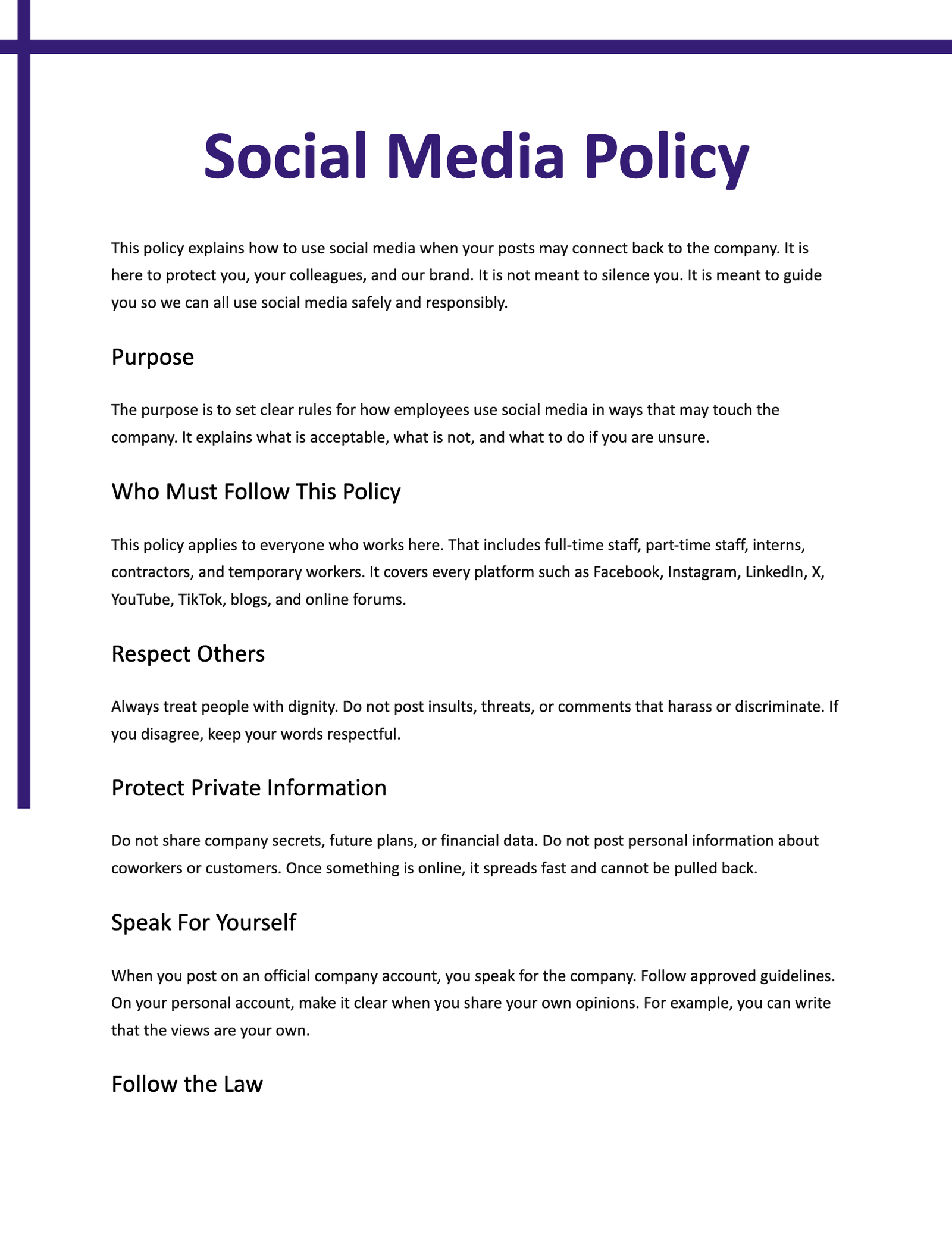
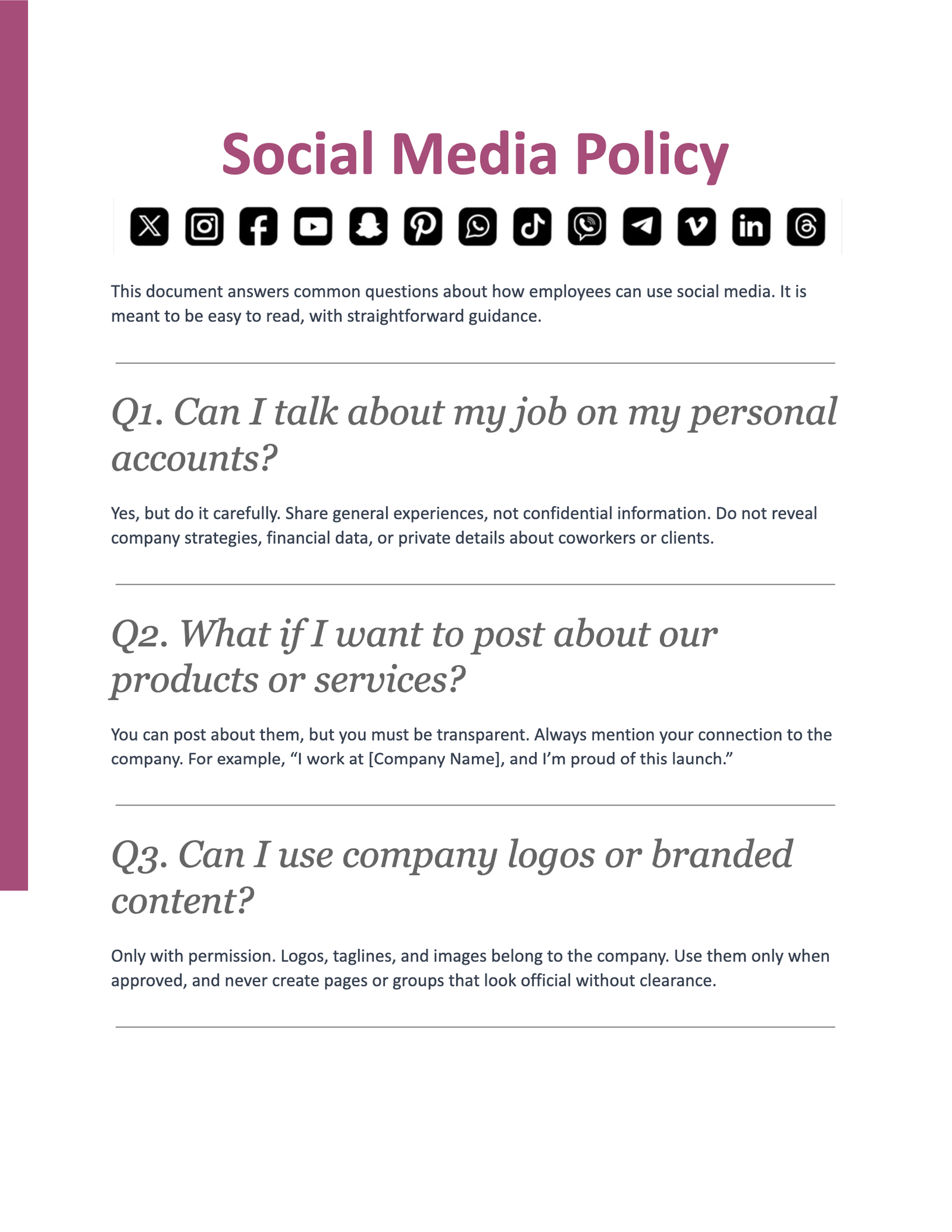
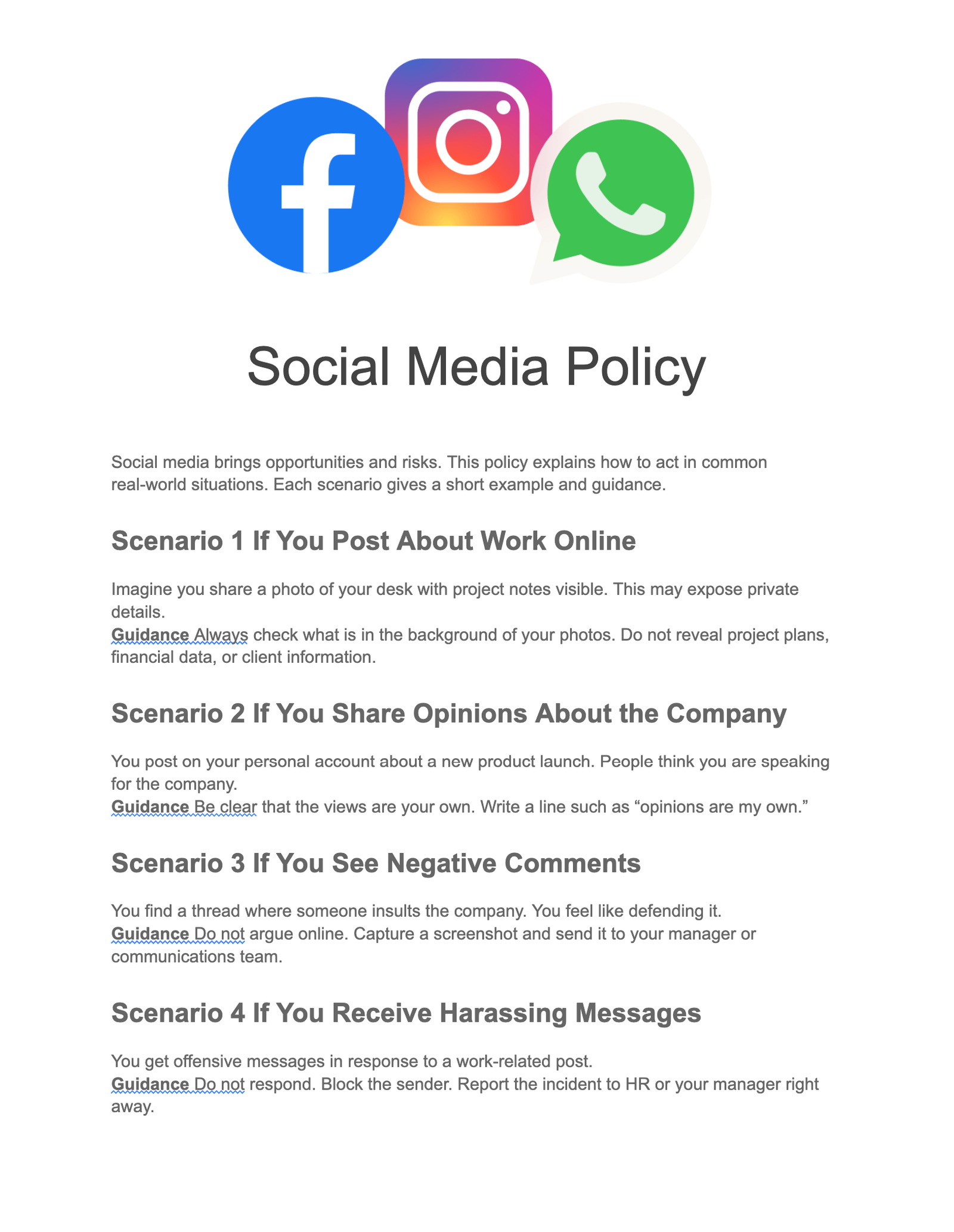
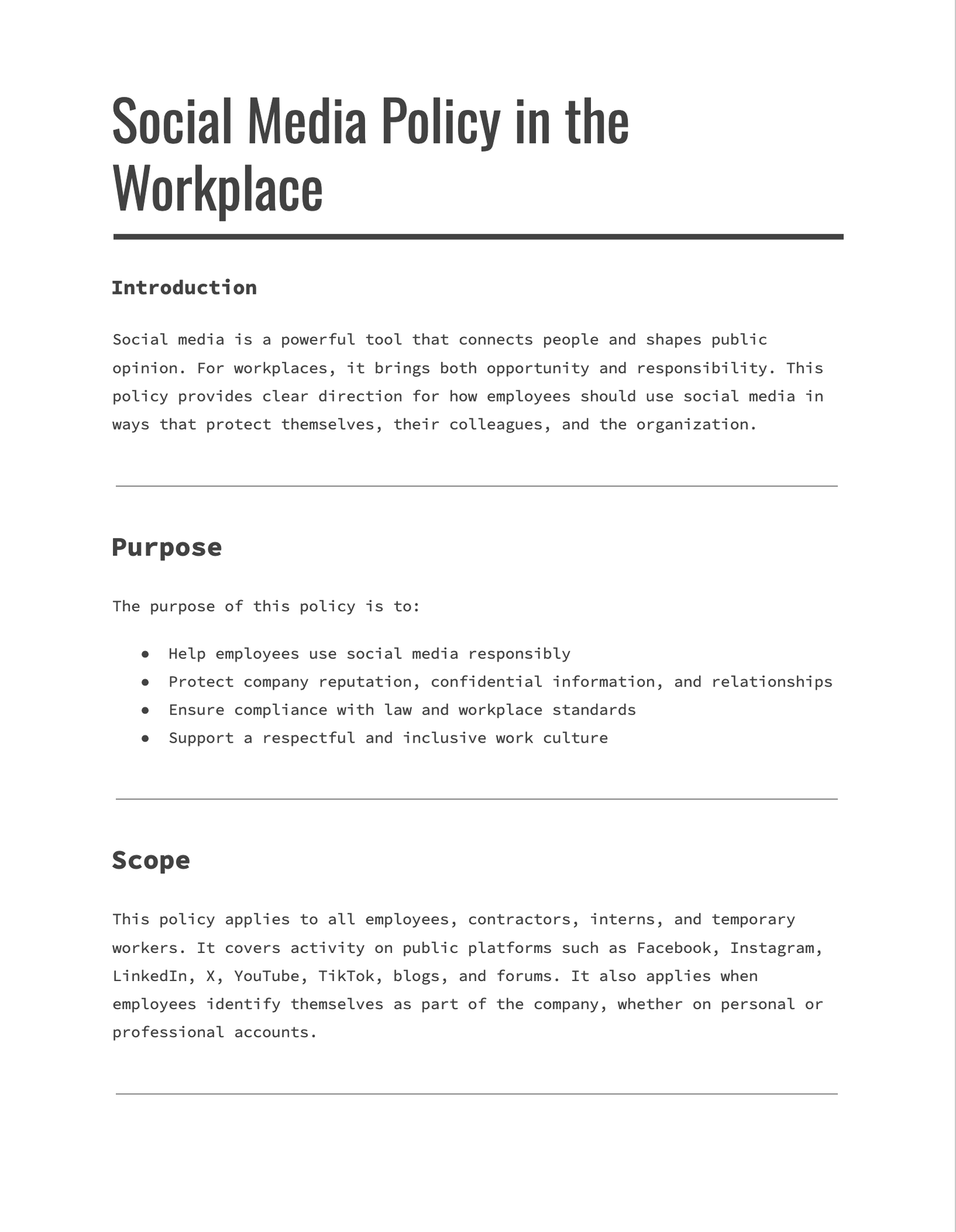
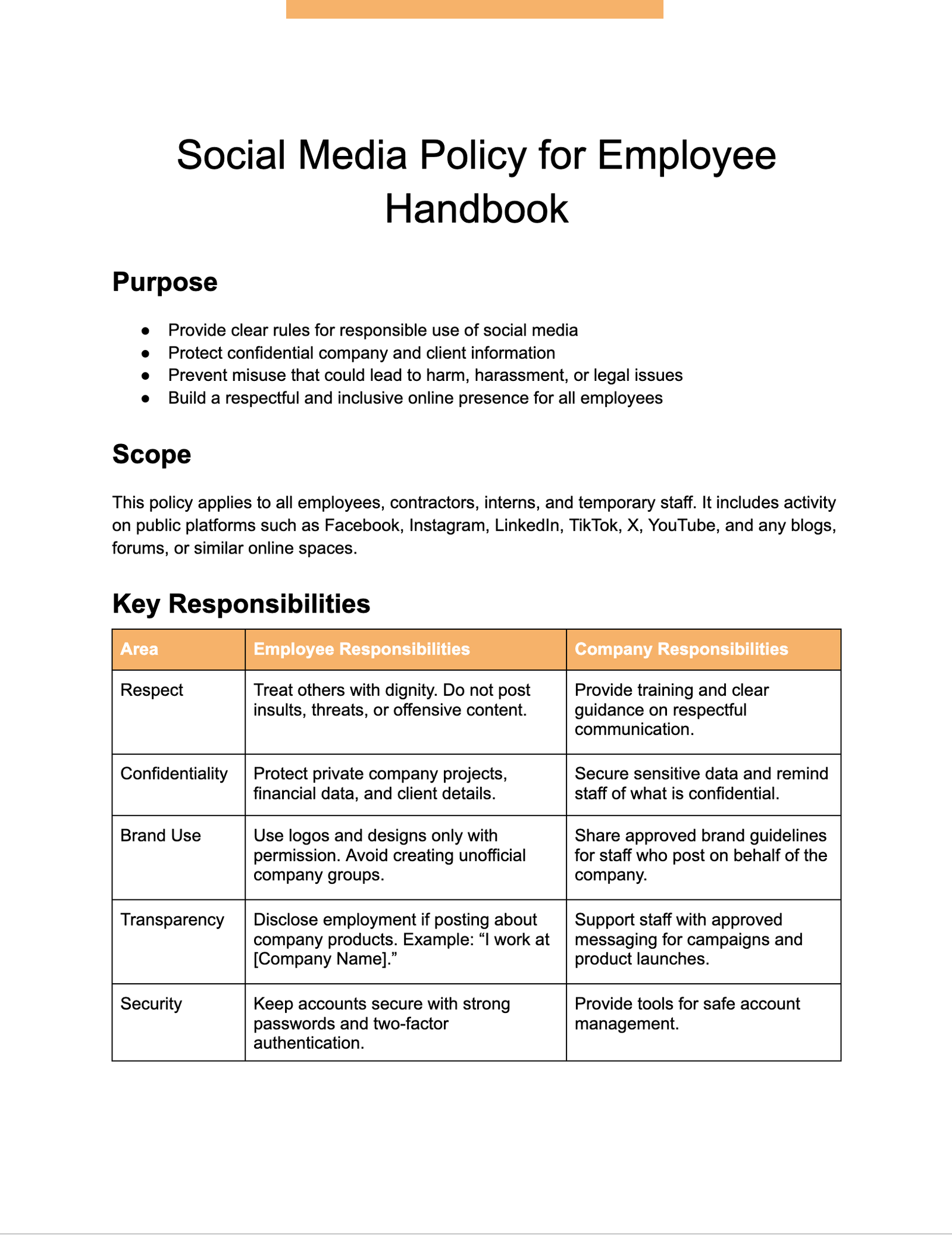
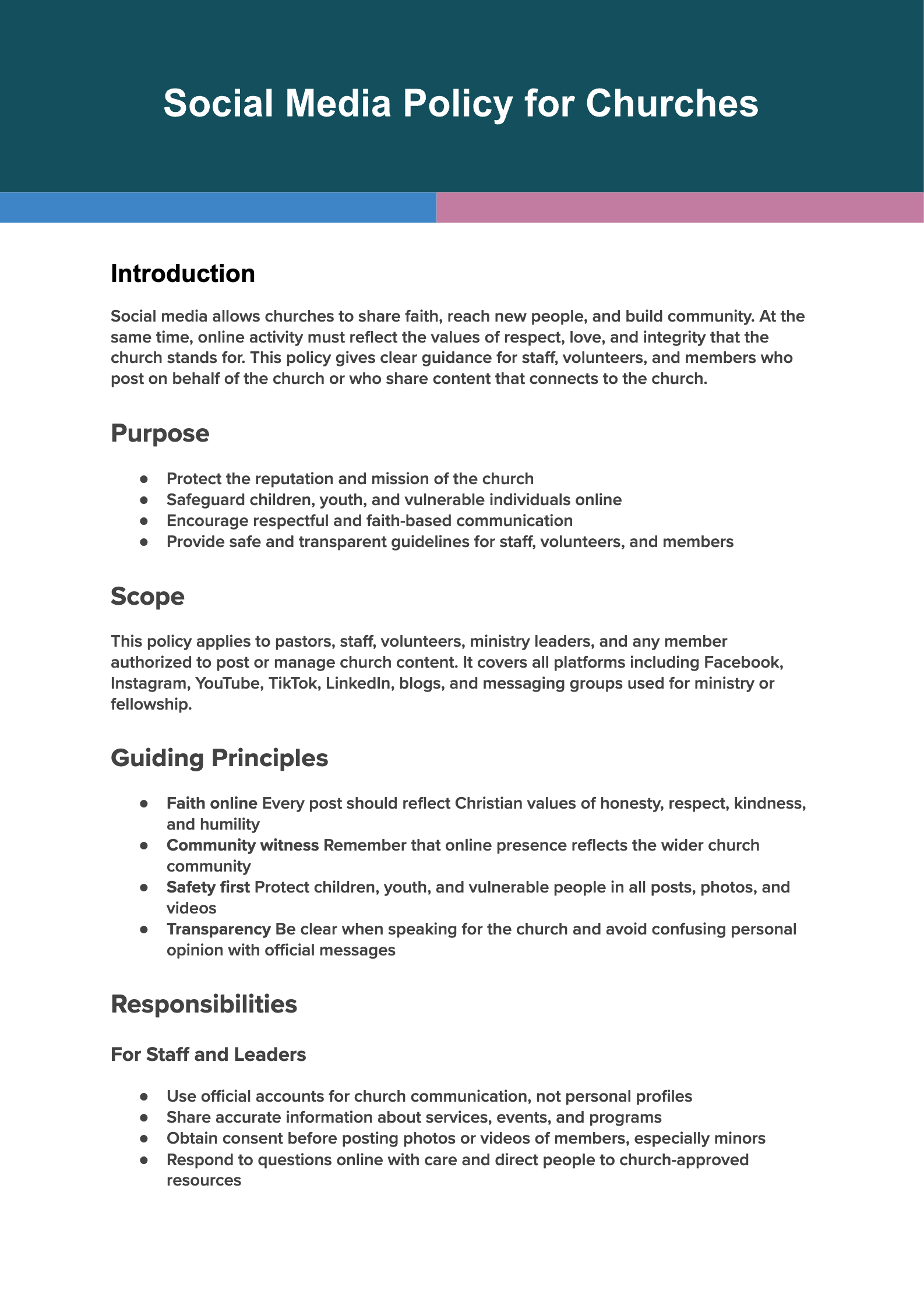
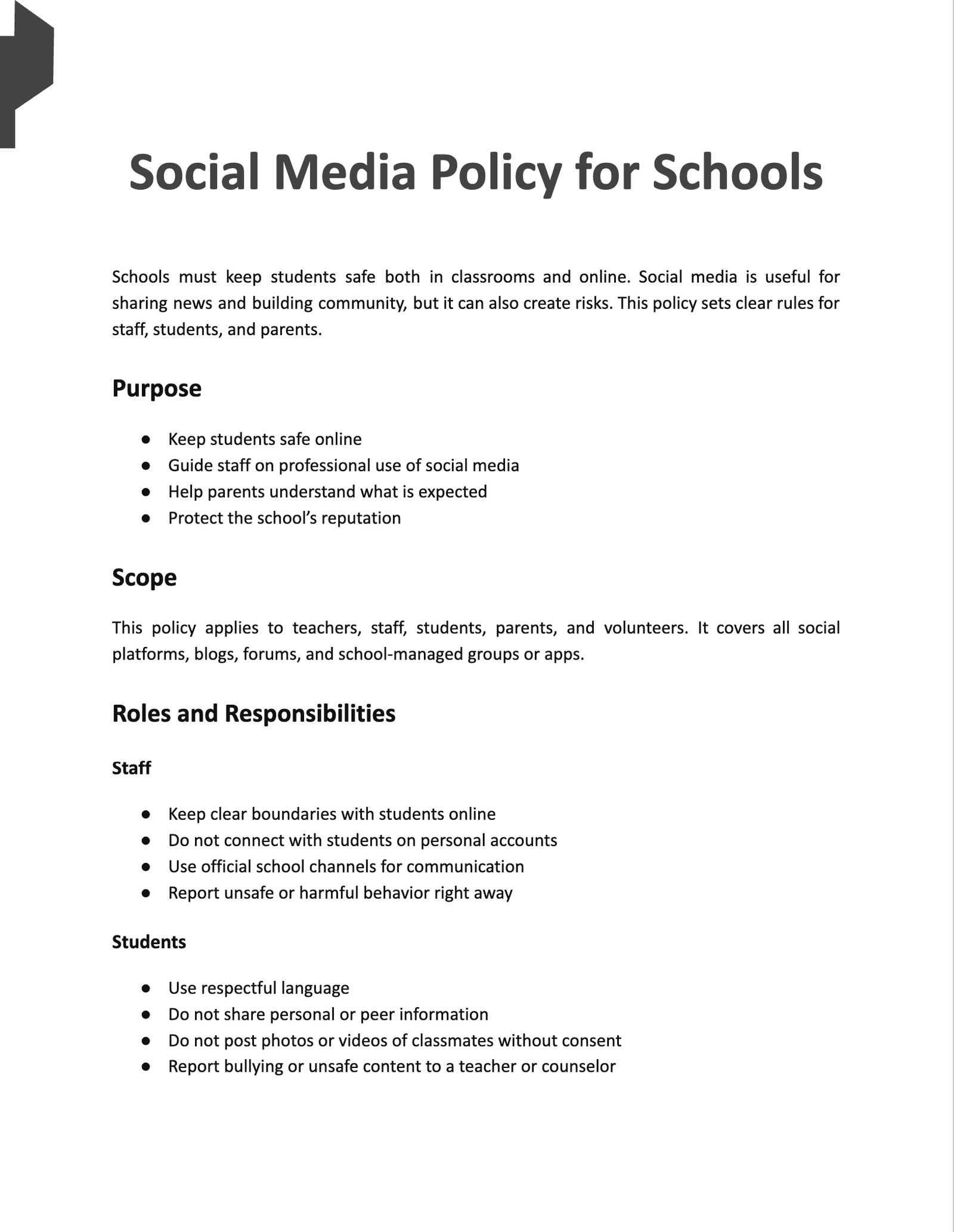
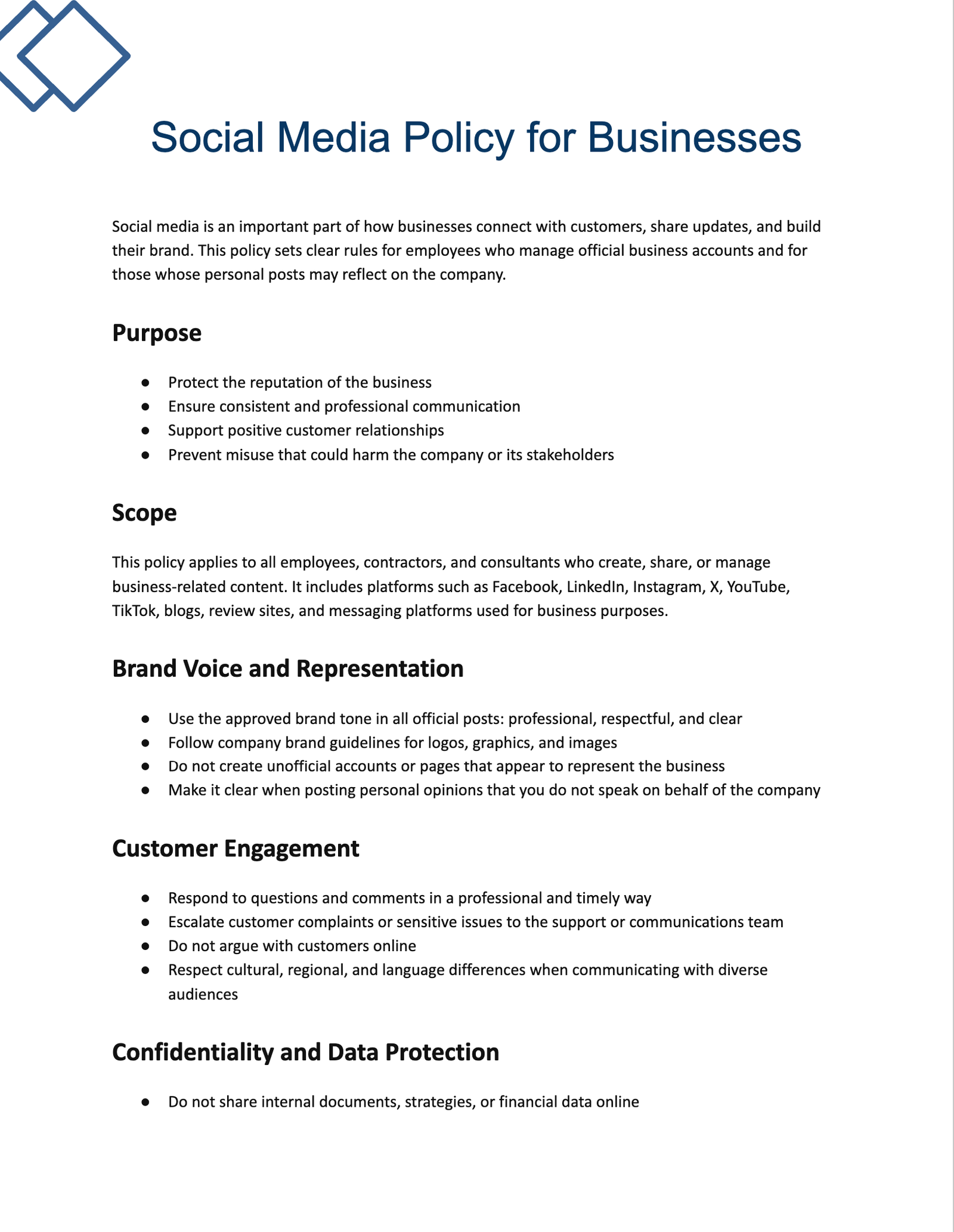
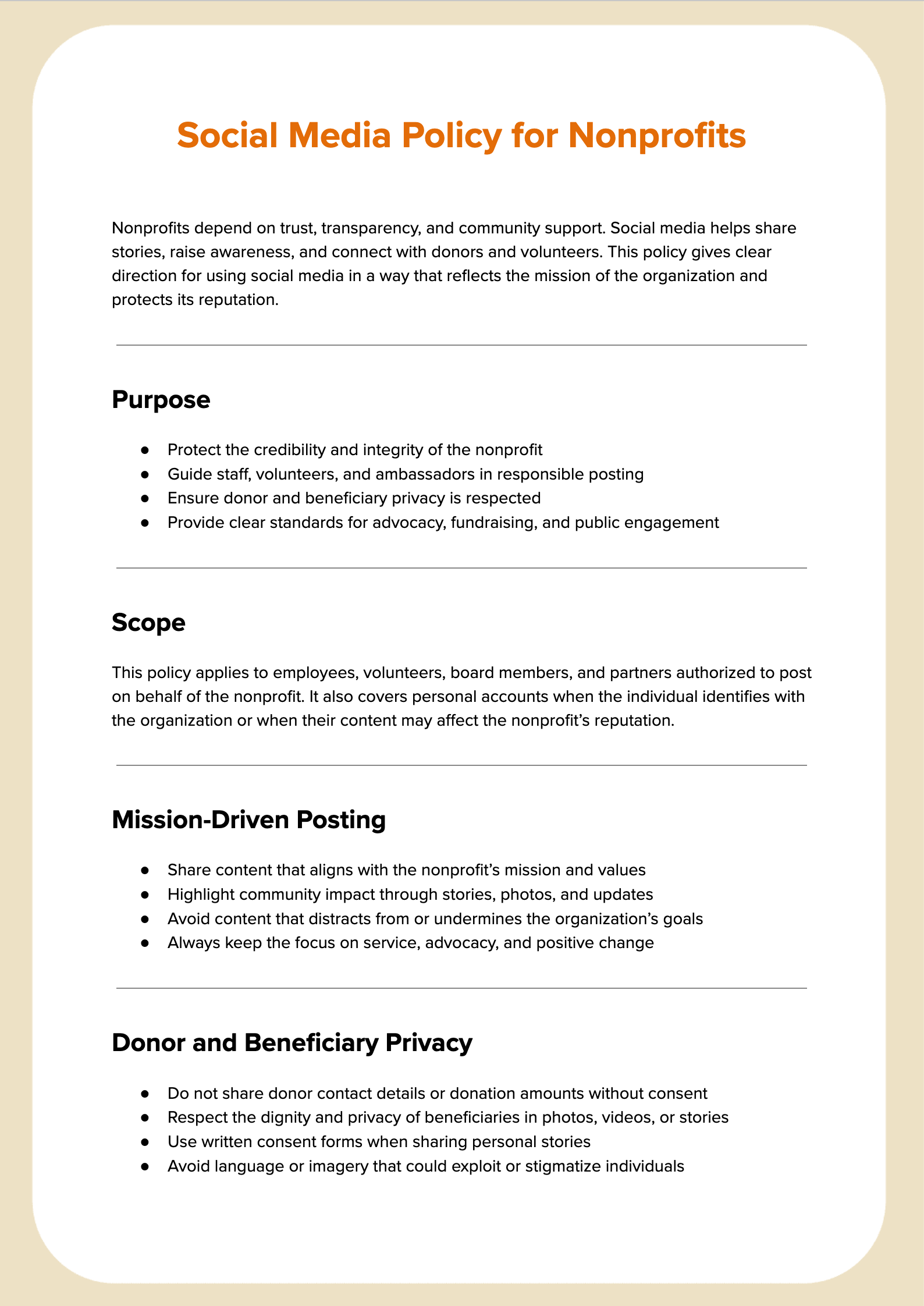
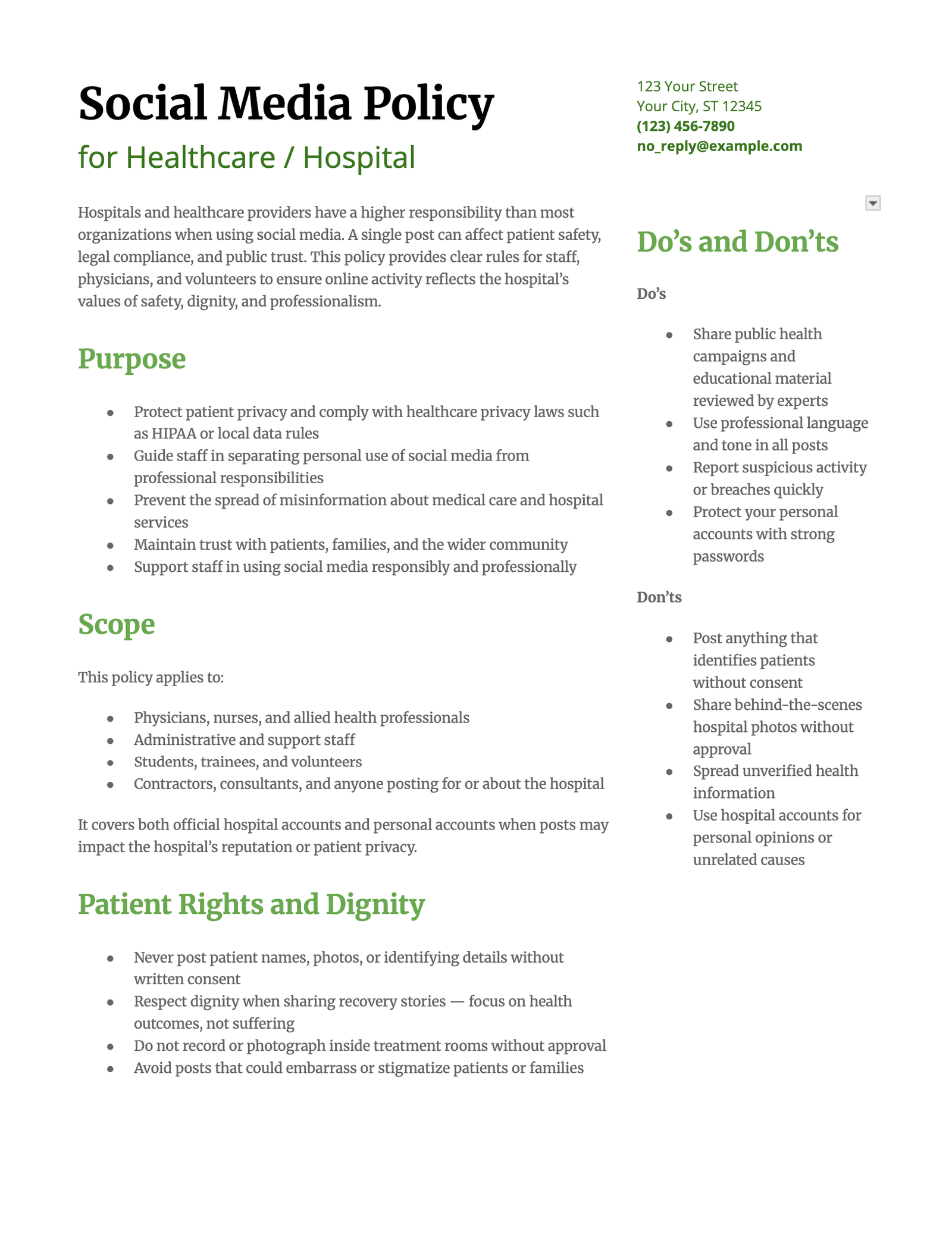
Social Media Policy Format
1. Purpose
While writing the social media policy, mention the purpose of the policy and what you are targeting to achieve.
Example: This social media policy gives a complete overview and guidelines for the employees setting proper rules about the use of social media platforms aiming to maintain the company reputation, legal terms.
2. Scope
State the policy terms clearly by mentioning to whom the policy is applicable.
Example: The social media policy is applicable to all types of employees, including the full time employees, contractors, freelancers, interns and every other individual as well.
3. Company’s Official Social Media Accounts
While writing the policy, mention all company official social media handles.
Example: The company’s official social media platforms include:
- Twitter/X
4. Guidelines for Using Social Media
After mentioning the social media handles, ensure to clearly define the do’s and don’t so that all employees can easily understand and follow them.
Example:
Do’s:
- Use respectful language.
- Cross Verify information before making it live.
- Maintain confidentiality of company data.
- Engage positively with followers and respond to queries in a professional tone.
- Follow copyright laws.
Don’ts:
- Do not share confidential information.
- Do not post offensive, or defamatory content.
- Do not share any of your personal opinions on company handle.
- Avoid conflicts of interest while posting about the company.
5. Personal Use of Social Media
Share clear instructions for employees about using the personal handles.
Example: Employees are given complete details about the company and in any of the postings, the employees are not supposed to use any of the company logos and branding.
6. Content Approval
Check the content and set for approval.
Example:
All the social media content that is prepared to go live on handles must be approved. The post content must be written according to the brand tone and the standards.
7. Security and Privacy
Ensure to mention about the handles login details and maintaining their privacy.
Example:
All the employees must maintain security and protect the login credentials.
8. Legal Compliance
Do mention the legal laws so that the employees must know about the rules.
Example:
Details about the employees laws, including the copyright, data protection and other details.
9. Monitoring and Enforcement
Clearly state how the details will be monitored.
Example:
Mention that the company reserves the right to monitor the company channels. And even give a detail about the policy violation as well.
10. Policy Review
Mention when the policy will be reviewed or updated.
Example:
This policy will be reviewed annually or as required.
11. Acknowledgment
Add a section for employees at the end to confirm they’ve read and understood the policy.
Example:
I _ acknowledge that I have read, understood, and agree to terms with the company’s Social Media Policy.
Signature: _
Date: _
How to Write a Social Media Policy?
Defining clear guidelines is important in order to protect a company’s reputation and keep the company away from any legal risks. This policy has to cover both the professional limitations and personal usage of social media to follow the standards for all staff members.
Step by Step Guide:
- Define the Clear Purpose: For any policy, defining its need is crucial. Include details like brand security, legal obligations, security protection, limiting employees’ usage, and others.
- Include Channels that are Covered: As the definition of social media keeps on changing, clearly stating the channels that are covered under this sets clear limits, such as blogs, Facebook, LinkedIn, X, Instagram, YouTube, third-party sites, messaging apps, and many more.
- Mention to Whom it Applies: Clearly disclose that the mentioned policy rules are applicable to everyone in the company, including employees who are full-time, part-time, contract, and others.
Guidelines:
- Ownership: Clearly state the access limitations and who has the authority to create, access, and handle the official company accounts.
- Set the Brand Voice: Mention the tone, language, and style that the brand should communicate in the handles.
- Set the Content Standards: Set the rules for acceptable and unacceptable content usage in the handles, including the logos and other formats.
- Other Negative Handling: It is also important to provide a predefined list for handling negative impacts such as dealing with negative comments, complaints, PR issues, and other such situations.
Data Personal Usage Limitations:
- Add a Disclaimer: Let the employees have a disclaimer about what type of details they can use on their personal handles regarding the company.
- Set the Confidentiality: It is important to keep confidential information hidden, such as trade secrets, financial details, client and collaboration information, and personal dealings in the professional space.
- Set to Follow Responsible Behavior: While it is important to follow the rules, clarify the employees’ online conduct while considering the anti-harassment, anti-discrimination, and code of conduct policies for individual comfort and safe working.
Legal & Security Norms:
- Security Practices: Mention the guidelines for using strong passwords, secure networks, and other personal accounts.
- Address Legal Limits: Inform employees regarding the laws on copyright use, financial disclosures, and defamation of the company or colleagues.
- Disciplinary Action: Clearly state the consequences for violating the policy, ranging from a warning to termination.
What is Social Media Policy?
A social media policy is a document that outlines how the employees in a company approach the use of social media, protecting the brand reputation and how the employees and brand represent themselves.
What are the benefits of a social media policy?
Writing a good social media policy is crucial to protect the brand, stating the warnings for employees about usage in and out of a professional space.
What are the risks of not having a social media policy?
Due to inappropriate posts and comments, the company’s reputation can be at stake. Employees may also share confidential information that can lead to legal consequences. To avoid such complications, a social media policy is mandatory.
Who does the policy apply to?
A social media policy applies to everyone in the company, from executives and managers to every other employee, including freelancers and interns. This helps in managing healthy limitations on usage and protecting the norms equally.
Is it necessary to have a social media policy for every employee?
Yes, having a set of standard guidelines for employees in the company is important to avoid legal complications.