
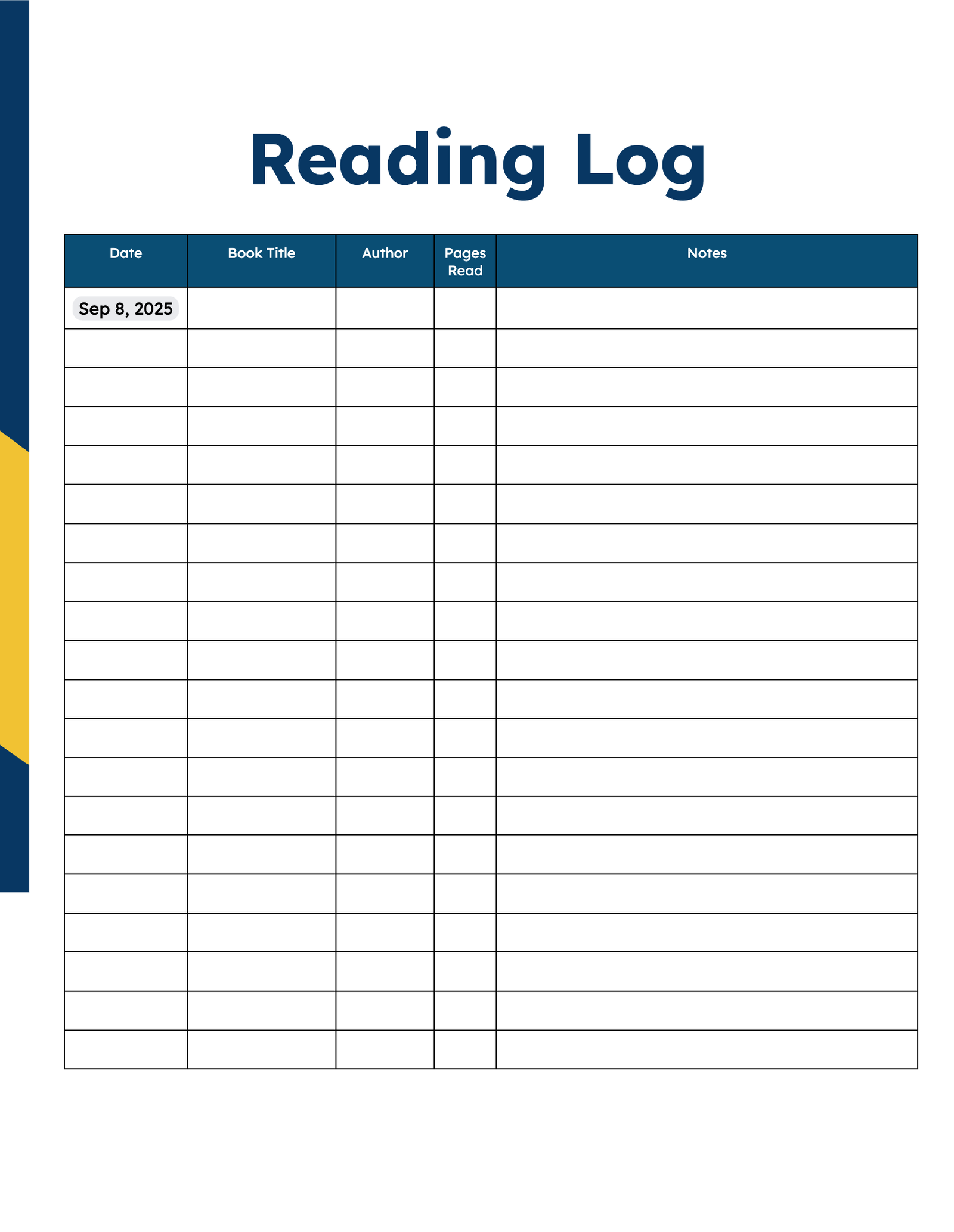
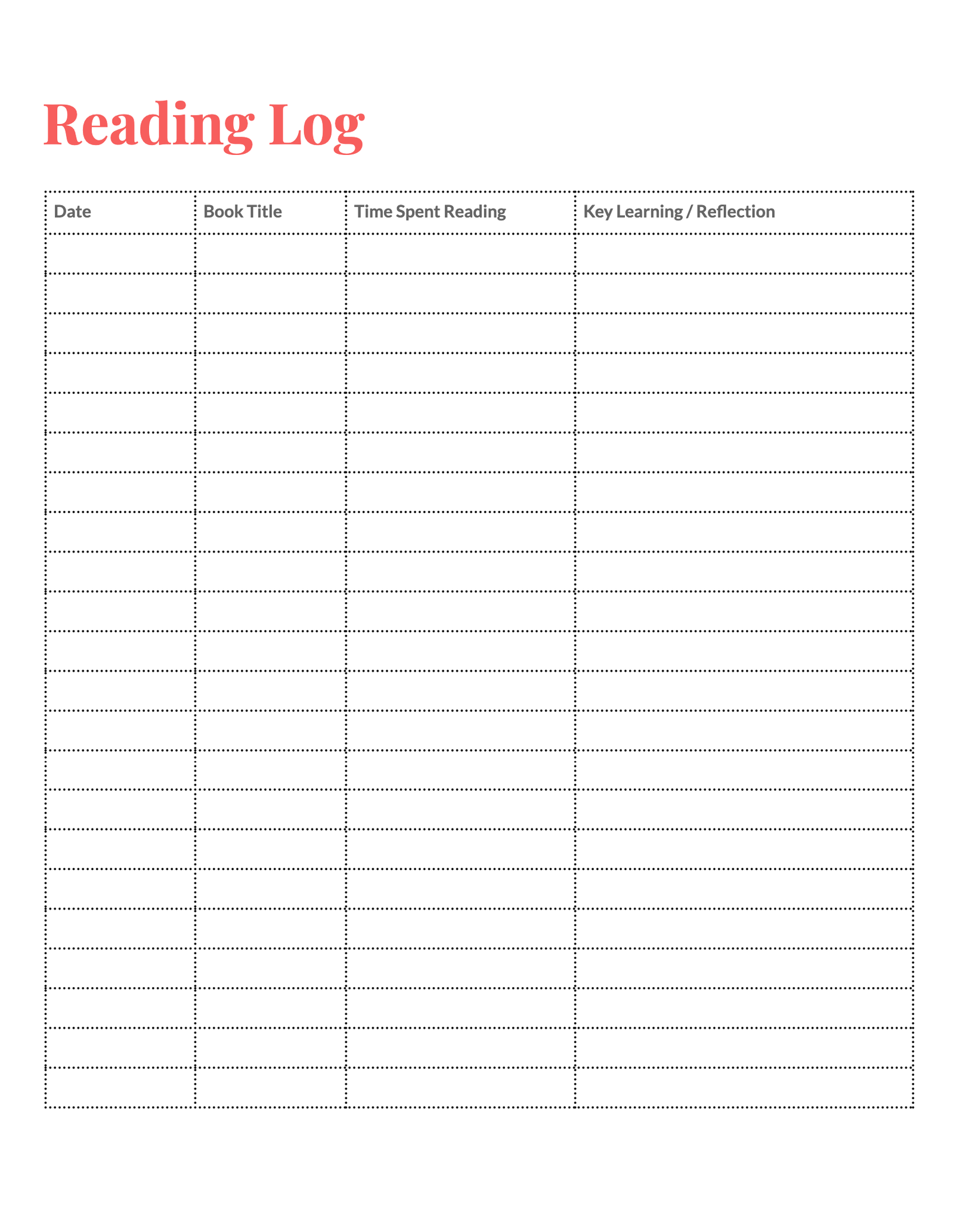
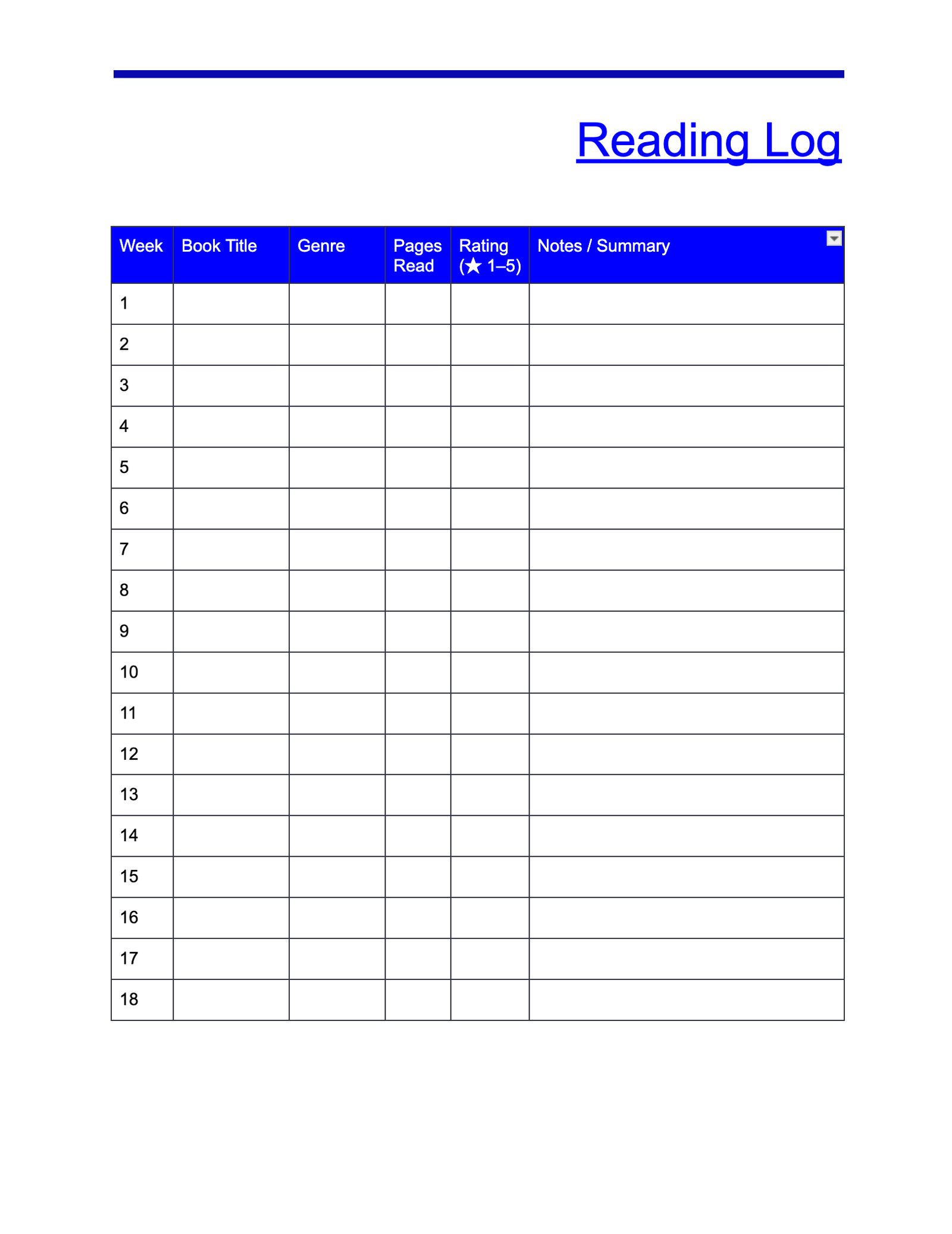
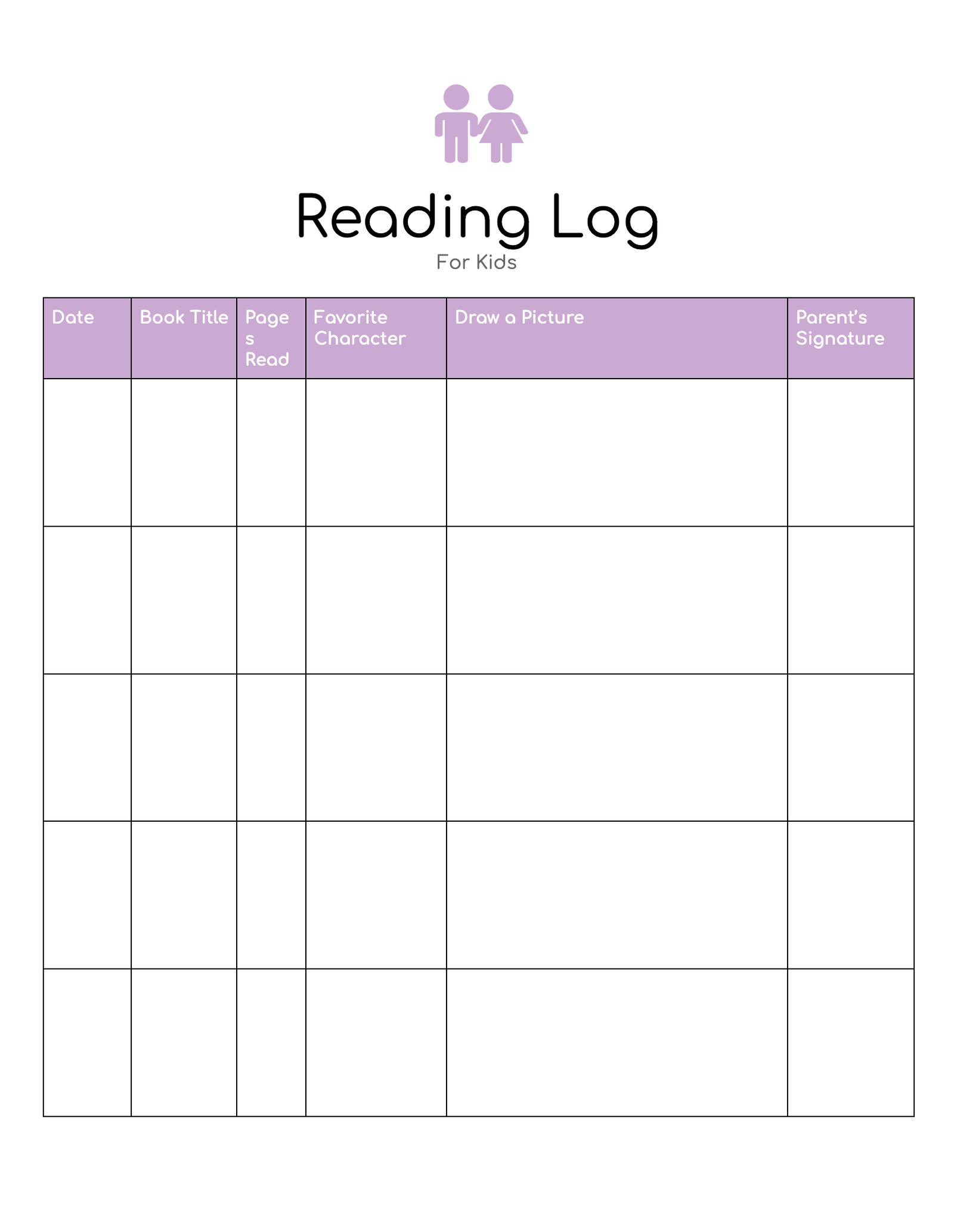
A reading log is a list or record of books or the reading material that a person has read, which is mainly used to keep track of progress, the book that you are reading, the author, and other details. Reading logs are widely used by students, teachers, and parents to keep track of progress as well as to encourage reading habits. You can find these reading logs in sample formats such as Word, Google Docs, Excel, and more. Select the best reading logs available at Docsi and download the most suitable log format to edit according to your requirement.
Reading Log Templates to Download in MS Word, Google Docs
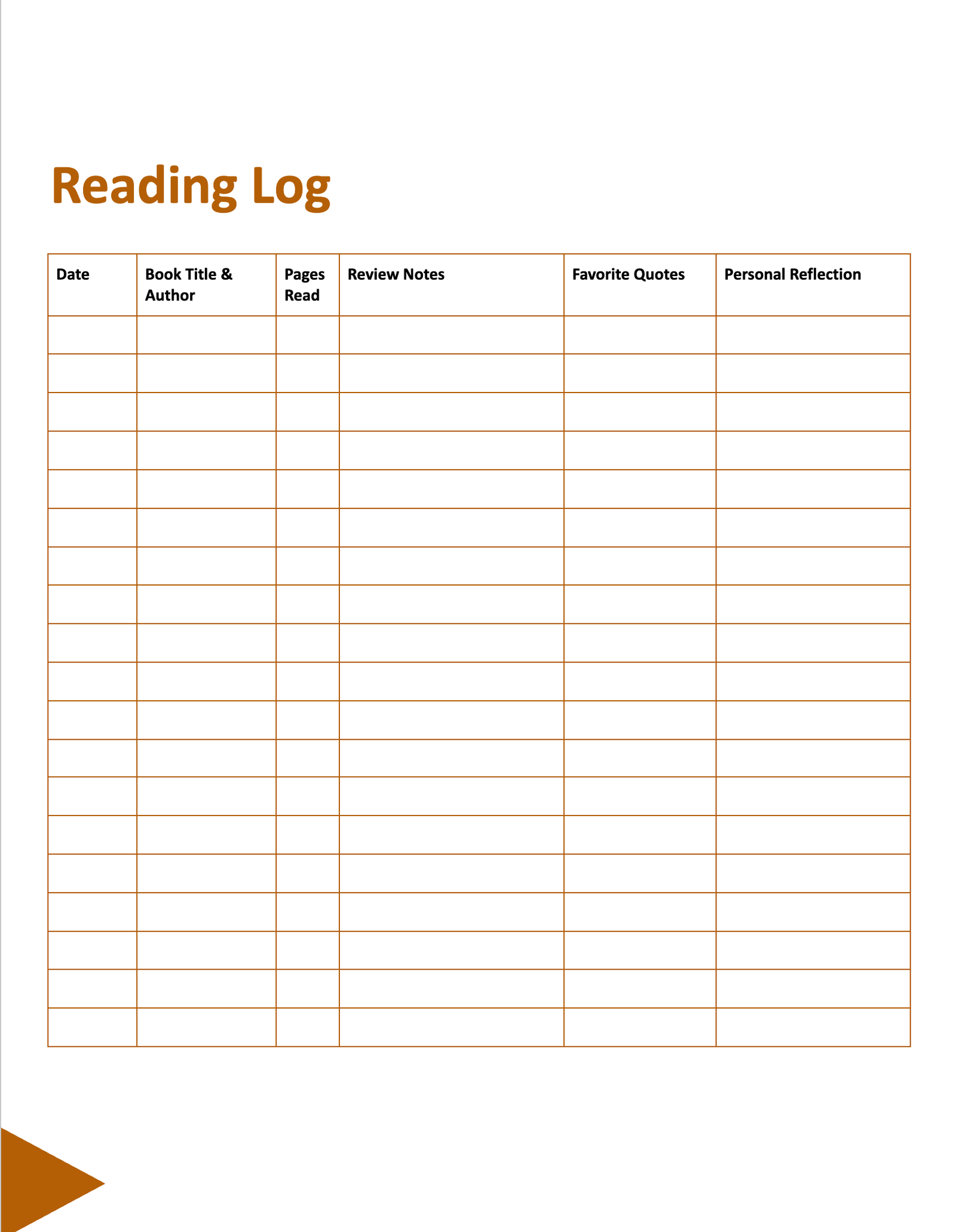
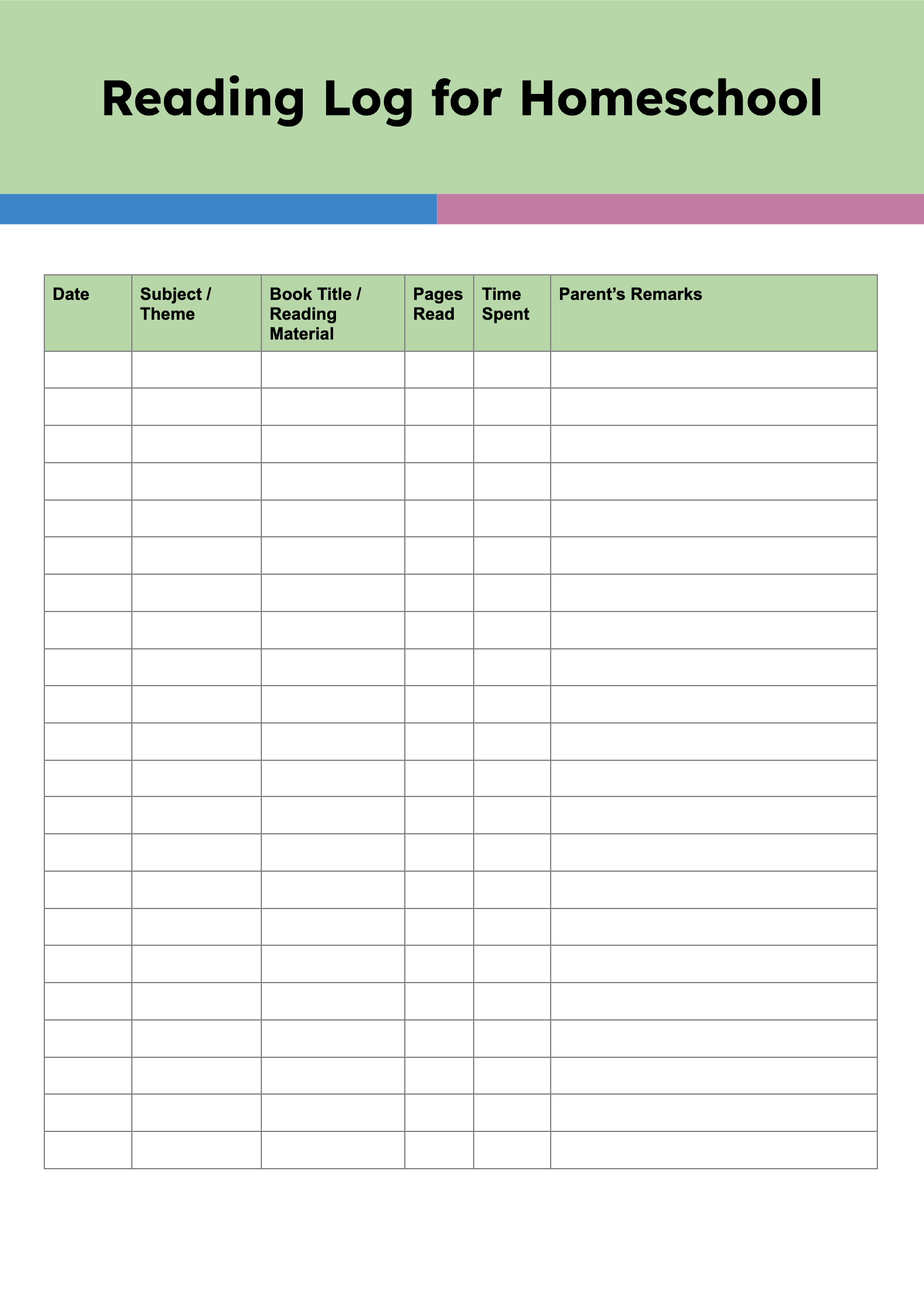
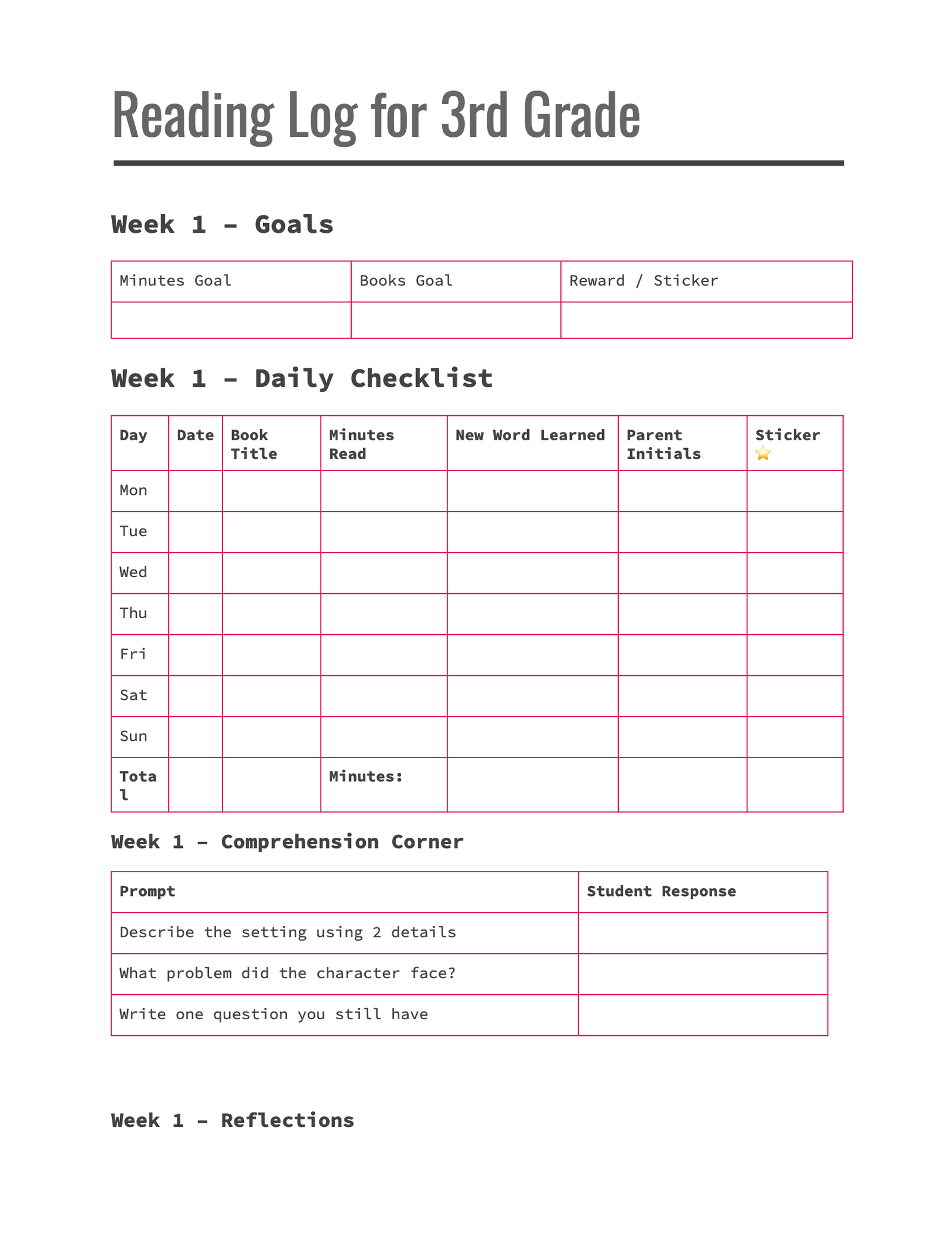
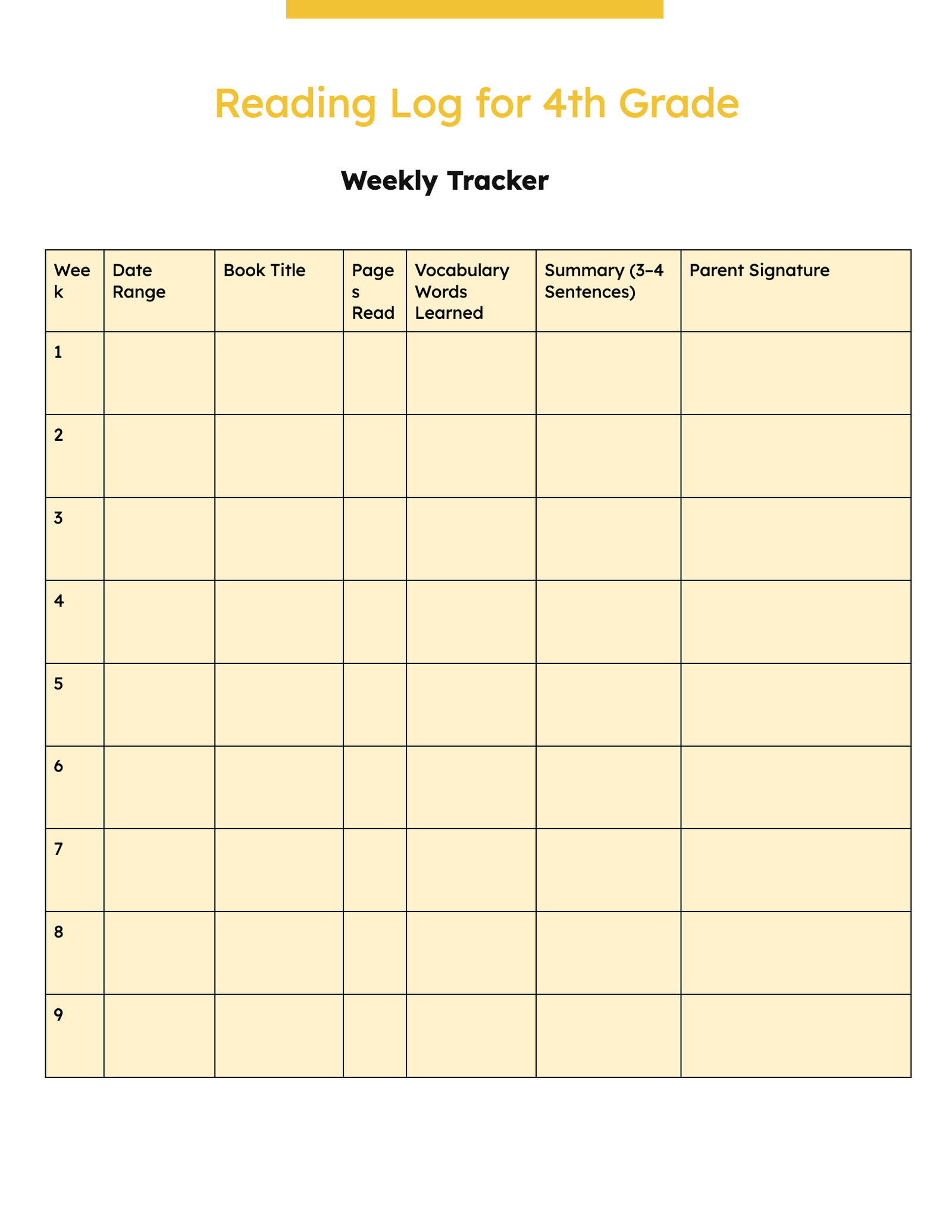
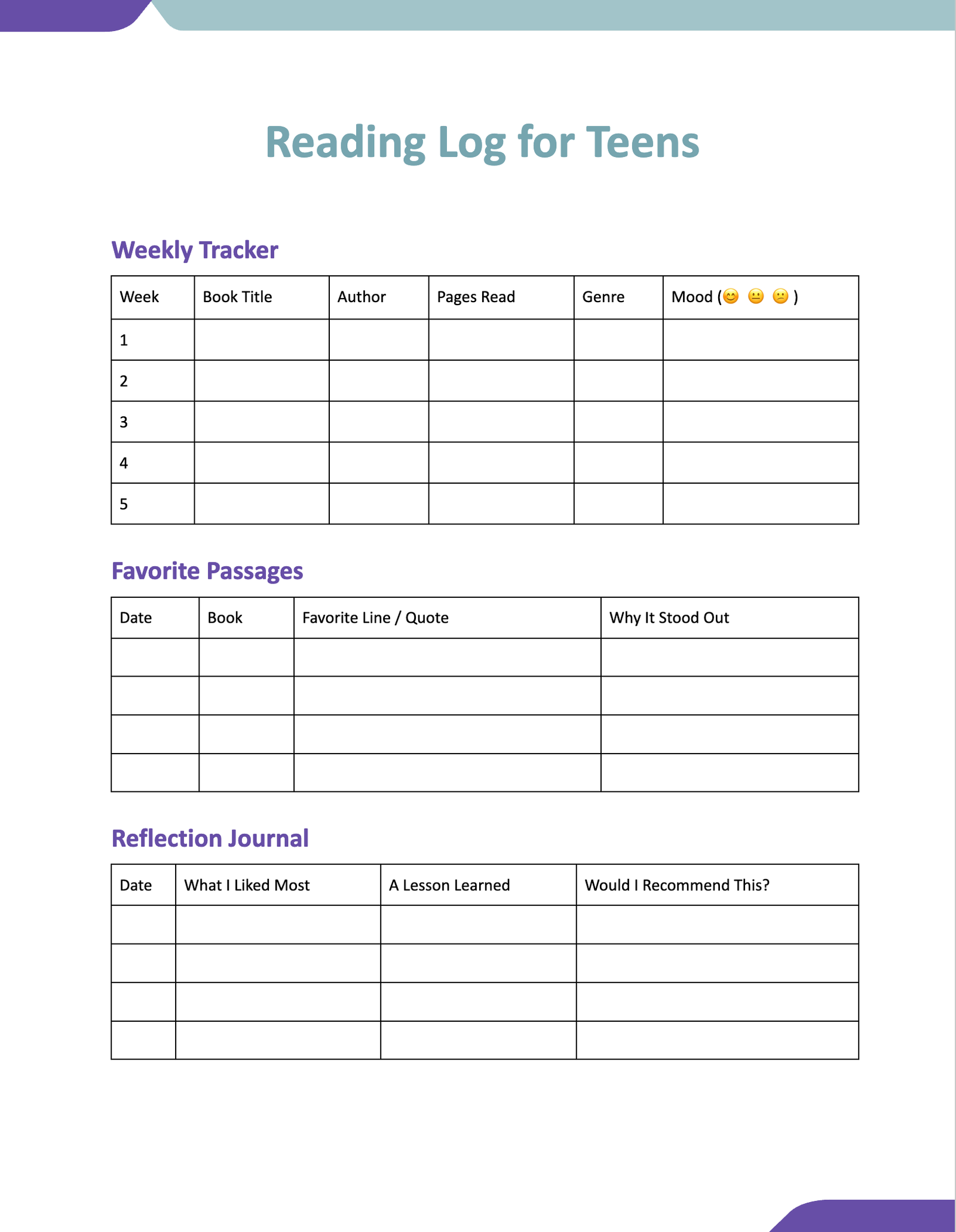
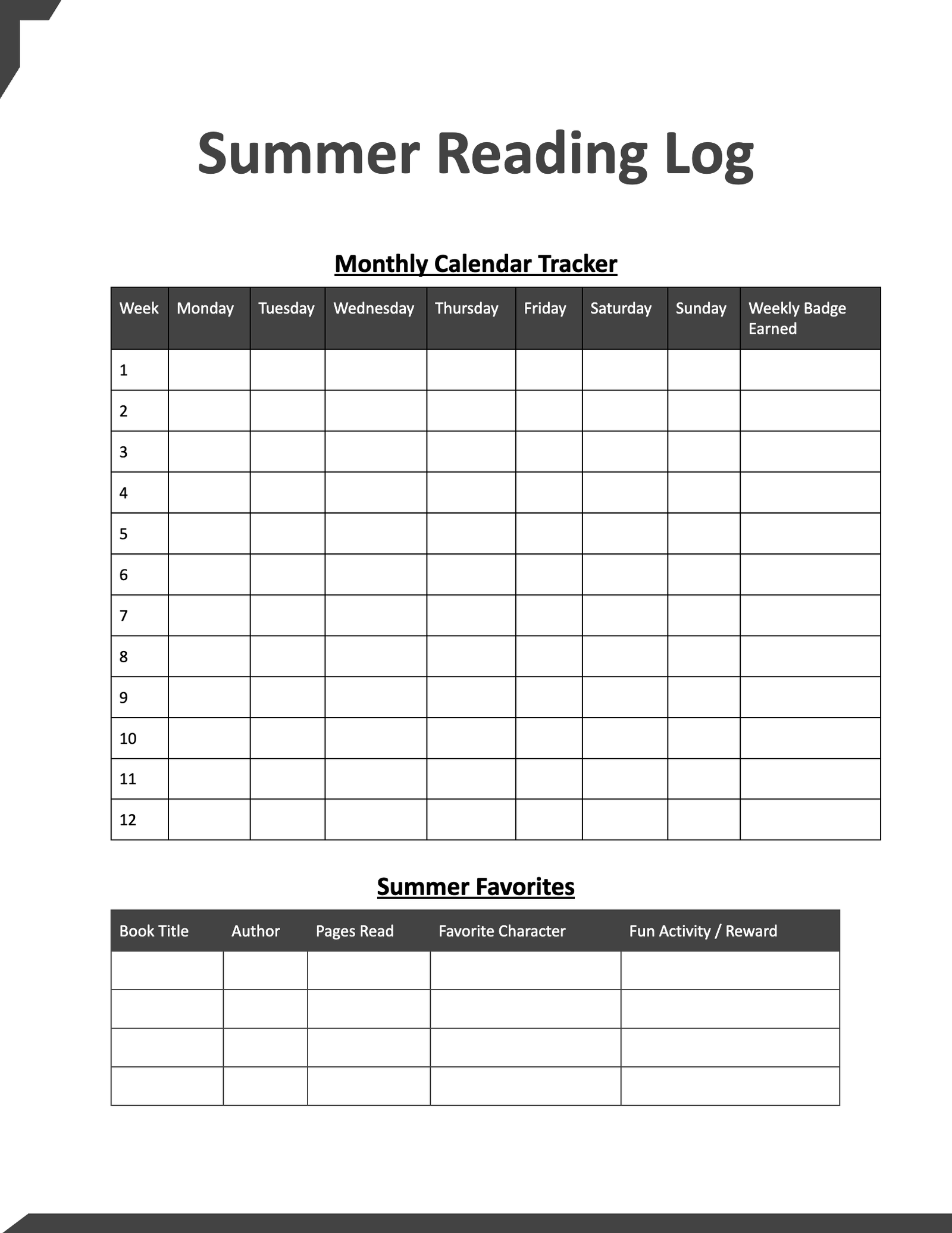
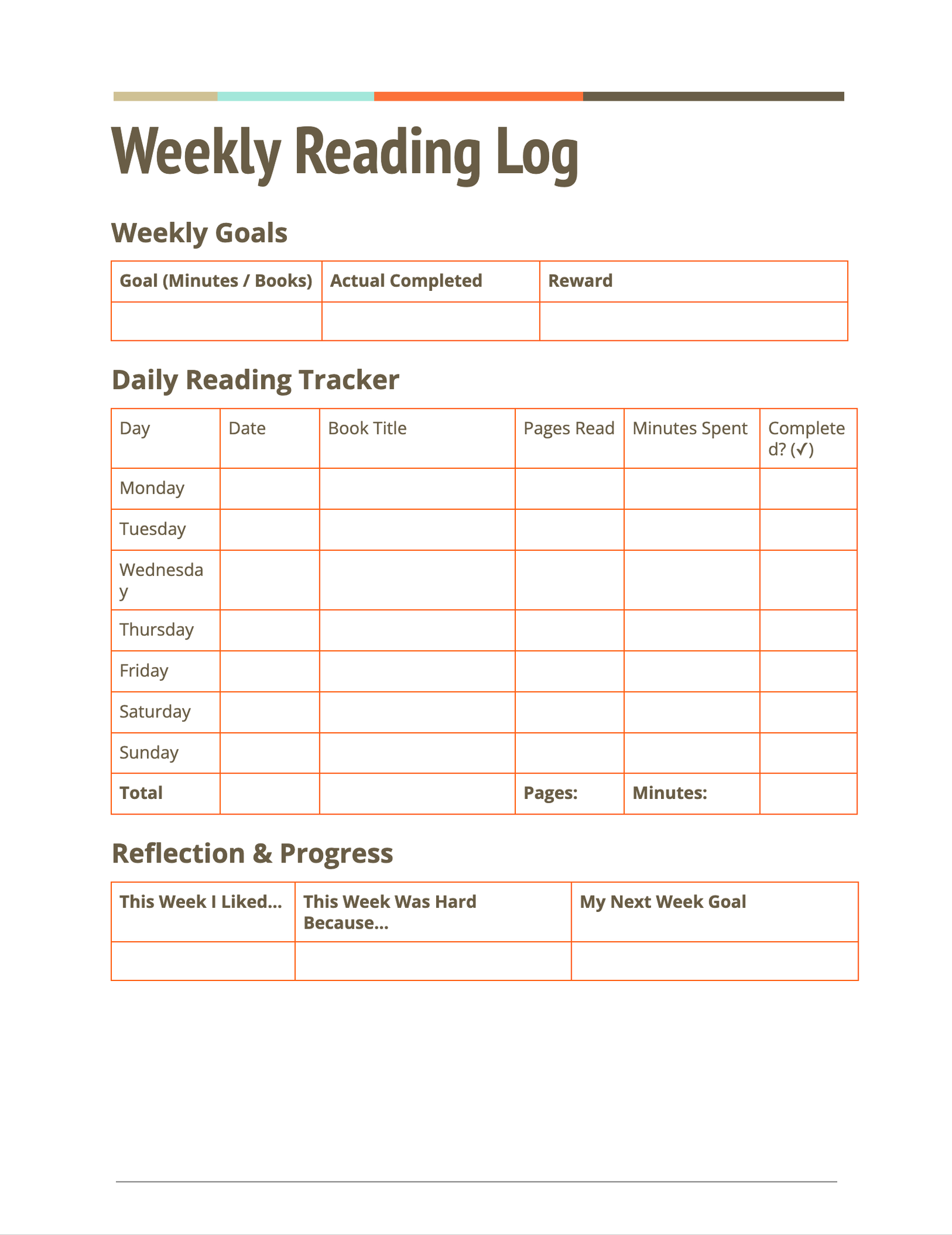
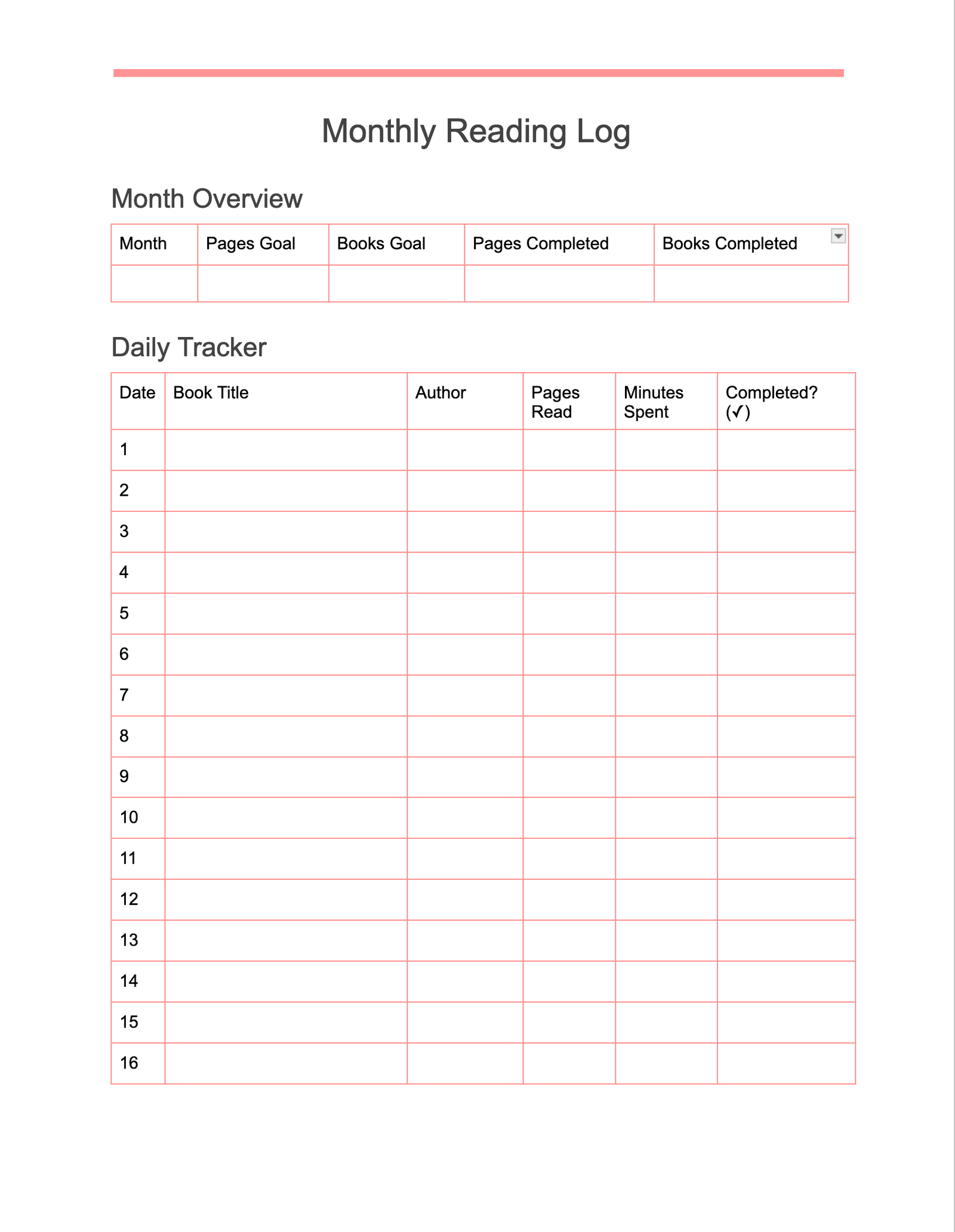
Reading Log Format
Step by Step Guide to Writing a Reading Log
Step 1: Write the basic information
Start writing a reading log with the key details of what you’ve read.
Include:
- Title of the book
- Author details
- Date of reading
- Number of pages or chapters read
Example:
Title: Rich Dad Poor Dad
Date: November 20, 2025
Pages Read: 1–10
Step 2: Summarize the details
Write a short summary about your reading, including all the details.
Tips:
- Keep it short by including 4–6 sentences
- Focus on only including the key points
- Avoid taking the sentences directly from the book toad to your log
Example:
The book Rich Dad and Poor Dad is a financial philosophical version of the two father figures. It explains how a rich dad works and builds assets where the poor dad works for money and buys those liabilities that they believe as the asserts.
Step 3: Write your personal opinion
It is an opinion feeling that you can include about what you have read in the book.
Such as:
- What did I like or dislike?
- How did the book overall make me feel?
- What did I learn from it?
Example:
I liked the book on the whole as the book Rich Dad and poor dad is a great financial knowledge accumulator. It guides the right path of investment and shows what are the do’s and don’t when planning investments.
Step 4: Note down new words or phrases
In every book, you can also learn some new vocabulary that helps you level up your English. Note down those new words and phrases with their meaning.
Example:
| Word | Meaning |
| financial programming | decision making strategies related to money |
| cash flow | The proportion of income to spending |
Step 5: Make a connection with the book
Try to connect the story with your life and connect with it.
Example:
This story reminds of the decision that took years back and still got stuck in the loop of EMI’s and house liability but after reading this book i could understand how people like me would think about buying a house and getting into a liability life.
Step 6: Review
Finally:
Read it to ensure it makes sense
Check spelling and grammar
Make sure sentences are clear
How to Write a Reading Log?
A reading log can be planned based on a simple or personal list of books that you have read, whether they are academic books or any of the journals. For more in-depth analysis, maintain a detailed entry of all the information in the following way:
Bibliographic details:
- Title & Author Details: Include the essential details of the book, like the title of the book and the author.
- Date when you read: Keep a note of the dates when you read the book and finished it.
- Source where you collected: For more detailed information, you can also include details about where you got the book, such as a library, bookstore, and more. You can also mention the format of the book, such as an e-book, audiobook, or any other.
Content details:
In the main content part, you can cover various factors that explain more about the book, such as:
- Summary: Write a brief overview of the book and its main details. Along with that, you can also keep track of the plots — if it is a fiction book, then add the key events included in the book, and if it is a non-fiction book, ensure that you keep track of the arguments that you have added.
- Characters involved in fiction books: Add the main characters and what you think about them.
- Main ideas of non-fiction books: Mention and explain the most important concepts of the book.
Personal analysis:
While maintaining the analysis of the book, include the following logs that clearly share an overview of the book, such as:
- Observations and insights: Clearly write your personal thoughts about the book and what you feel about it. This should also include what you personally feel about the content, your emotional involvement with the book, what you learned, and other insights.
- Favorite quotes: If you have found any quotes that are interesting or surprising, then include them along with the page number for easy tracking.
- Rating and recommendation: On a final note, include the rating that you can give to the reading and also mention some points that can recommend the book to your friend.
A reading log is a clear record of the data that a person has read. The log carries clear information about the book and author, and has a record of personal insights, dates when you read, quotes, and the favorite parts in the book. This reading log is mostly used by students, families, and individuals who have the habit of reading regularly, and it can be a beneficial log template for both academic and leisure reading.
What is a reading log?
A reading log is a record used to track the books or materials that you read, including details like the title, author, date, number of pages completed, and time spent on reading.
What is the purpose of a reading log?
The reader’s log helps readers to monitor their reading habits, maintain details, and stay consistent with reading goals.
Who uses a reading log?
Reading logs are commonly used by students, teachers, parents, and book club members to track progress and reading activities.
What should be included in a reading log?
A reading log includes details like the book title, author, date, number of pages read, reading time, and a short summary, along with other favorite quotes and details.
How often should I fill out my reading log?
Filling the reading log completely depends on the individual’s choice. Some people choose to fill in the details daily, while some prefer to fill it weekly or after finishing the whole book.